




Hotline 0086-519-86239986

All News
Sourcing a diesel engine from China offers your business substantial cost savings. However, procurement agents must carefully balance low purchase prices against potential performance risks and regulatory issues. You need to verify supplier credibility, check international emissions certifications, and assess technical suitability before issuing purchase orders. Thorough evaluation guarantees your machinery performs reliably under harsh operating conditions.
Maintenance Action | Prescribed Schedule |
|---|---|
Oil/Filter Service | Strict 500-hour interval |
Fuel Filter Replacement | Every 250 hours in dusty environments |
Injector Testing | Every 1,000 hours or annually |
Following these prescribed maintenance regimes effectively mitigates operational failures. You safeguard capital investments by prioritizing proven build quality today.
Match engine horsepower to your workload and add a twenty percent reserve buffer to prevent overheating.
Choose water-cooled engines for extreme heat and pick air-cooled engines for lightweight machinery in dusty areas.
Verify factory ISO standards and regional emissions compliance to prevent custom delays or heavy fines.
Secure your purchase with traceable bank transfers or escrow services to protect your money from scams.
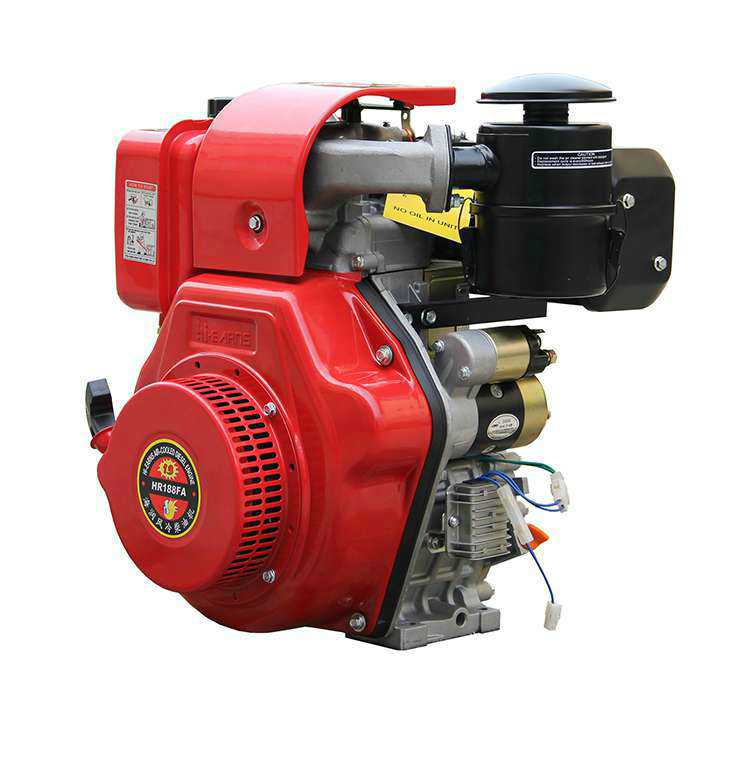
Purchasing an industrial diesel engine requires exact matching between machinery specs and work demands. You must check key performance parameters to select the best unit for your equipment.
Key Specification | Example Values from Models | Why it is Important for Verification |
|---|---|---|
Emissions Standard | China Nonroad Stage III, Stage IV | Ensures the engine complies with local environmental regulations. |
Maximum Power (hp/kW) | Categories from 0-19 kW | Determines if the unit provides sufficient output for the workload. |
Torque at RPM | Specified at 1400 rpm or 1600 rpm | Shows pulling power and operational cycle match for heavy loads. |
You need to match engine output directly to your operational demands. Calculating total dynamic head and liquid flow rates helps you determine exact horsepower needs for water pumps. Smaller irrigation systems typically require 5HP–6HP engines. Long-distance or high-pressure applications need 9HP–11HP engines.
You should always build a power reserve buffer into your calculation. Selecting an undersized unit causes severe overheating under continuous heavy work. Oversized units waste expensive fuel through improper loading. You must engineer a 15% to 20% power reserve above maximum calculated shaft power. This buffer prevents stalling during sudden load variations.
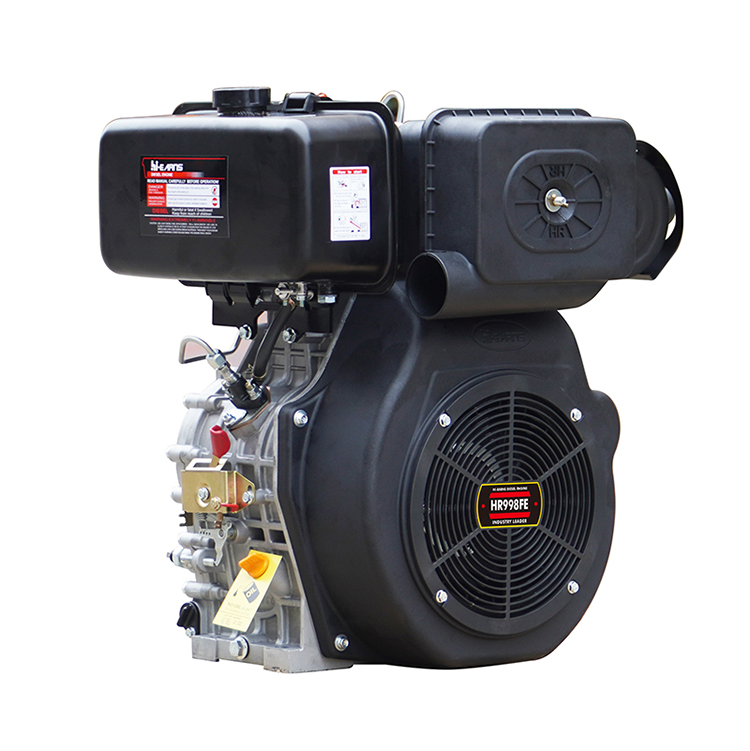
The Hi-earns lineup provides options from 4 HP to 25 HP, covering 2.5 kW to 20 kW. You can select single-cylinder or V-twin cylinder configurations depending on your space and output requirements. Integration features also dictate system installation. You can choose recoil hand-start or electric start options. Matching keyway or taper shafts ensures immediate alignment with your existing power transmissions.
Advanced internal engineering drastically lowers long-term operational expenses. Hi-earns engines feature optimized sealing to drop fuel consumption while maximizing output power. Built-in multi-stage filtration systems protect core components from dirty operating environments. Hi-earns' patented 5-stage dry-wet combined air filter achieves 99.9% filtration efficiency. This system traps microscopic dust particles before they enter combustion chambers.
Operating environment determines the optimal engine cooling setup for your equipment. Air-cooled models eliminate external radiators, whereas water-cooled models rely on circulating liquid coolant.
Engine Type | Maintenance Description |
|---|---|
Air-Cooled | Simple. |
Water-Cooled | Requires coolant and radiator maintenance. |
Water-cooled systems offer superior performance in continuous high-load applications. Tropical environments with ambient heat exceeding 40°C require liquid cooling. The liquid coolant carries heat away effectively, maintaining a precise temperature range between 85°C and 105°C via a internal thermostat. This precise thermal control reduces internal engine stress under heavy loads.
Air-cooled models offer lightweight simplicity for mobile construction machinery, water pumps, and portable generators. They eliminate risk of radiator leaks or coolant contamination. However, ambient air has lower heat-carrying capacity than liquid. Air-cooled designs suffer performance degradation from localized hot spots in extreme ambient heat. You must evaluate surrounding dust levels against ambient operating temperatures before picking a cooling design. Air-cooled units excel in dusty conditions because they lack fine radiator fins that clog quickly.
Purchasing a diesel engine requires clear evaluation of manufacturer tiers. Top brands like Weichai Power deliver 53.09% thermal efficiency for maximum fuel savings. Market leaders like Yuchai Group cover 5 kW to 3,000 kW power ranges and hold roughly 35% market share in Chinese power generation. Certified Tier-1 units cost between $4,000 and $12,000 for 5 kW to 10 kW setups. Budget alternatives cost only $500 to $2,500. However, lower upfront prices often introduce severe operational risks.
Buyers aren’t choosing Chinese generators because they trust every listing. They’re choosing them because they’ve learned how to filter: checking for ISO-certified factories, verifying engine model numbers against manufacturer catalogs, and requesting video unboxing of pre-shipment samples.
You must execute strict supplier verification before placing purchase orders. Leading manufacturers back their equipment with standard warranties covering 12 months or 1,200 running hours. Lower-tier suppliers frequently use reverse-engineered parts without proper metallurgical standards. These low-cost components suffer from thermal expansion mismatches during heavy operations. Requesting an official OEM Authorization Certificate protects your business from unauthorized, substandard machine assemblies.
Engine durability depends directly on high-grade raw materials and precise manufacturing process controls. You need to verify core internal components before buying:
Cylinder heads require high-quality gray iron or compacted graphite iron to resist extreme thermal fatigue.
Crankshafts must feature forged steel with induction-hardened journals to endure massive dynamic torque loads.
Piston kits and cylinder liners demand high-precision CNC machining to maintain accurate bore tolerances.
Common Rail Diesel injection systems operating above 2,000 bar require clean-room handling to avoid contamination.
Premium suppliers guarantee product quality through recognized global management standards. Factories certified under ISO 9001 and IATF 16949 follow strict defect-prevention processes. These rigorous factory controls maintain tight dimensional tolerances down to a few microns. Exact tolerances eliminate tolerance stack-up and prevent mechanical stress under continuous prime power loads. You secure long-term operational success by prioritizing certified factory builds.
Importing industrial power equipment requires rigorous legal checks. You must confirm international safety marks and environmental certifications before transferring funds to foreign factories. Missing regulatory documentation leads to unexpected customs rejections, heavy fines, or immediate port seizures.
Quality management systems guarantee consistent factory assembly and rigorous material testing. You must verify factory ISO 9001 credentials to protect your procurement capital. Authentic supplier auditing follows a clear, step-by-step verification process:
Request the certificate number and the issuing body name, such as SGS, TÜV, or BV.
Search the issuer’s public database directly to confirm active certificate status.
ISO certificates are checked against the issuing certification body’s online registry and, where possible, cross-referenced via IAF CertSearch or the relevant accreditation body.
European target markets require full CE mark compliance for imported commercial machinery. Proper verification prevents unexpected shipment delays and protects your business from civil liability. You must demand a complete compliance pack from your Chinese supplier containing critical regulatory records:
The EU Declaration of Conformity accompanied by a comprehensive list of applied technical standards.
The user manual translated into the official language of the destination country.
Stage V engine evidence demonstrating verified compliance with current regional emissions directives.
A clear noise statement indicating whether the product is in or out of scope of noise regulations, accompanied by proof if in-scope.
Verification failure exposes your operation to total commercial loss. You must apply a strict three-step protocol when inspecting supplier credentials:
Request all test reports and certificates upfront from the supplier.
Cross-check these documents with the issuing authorities to confirm their validity.
Decline the order if the provided documents are found to be invalid or incomplete, as this is a major compliance risk.
Leading manufacturers like Hi-earns build their products under strict ISO9001 and CE standards. Providing fully verified compliance packages ensures rapid customs clearance at receiving ports.
Global jurisdictions enforce distinct environmental laws on imported power units. You must verify compliance with local laws governing Mobile Nonroad Diesel Engines before placing production orders. Buying non-compliant engines creates severe legal liability and limits equipment deployment.
The U.S. Environmental Protection Agency provides the official regulations for Emissions from heavy equipment with compression-ignition (diesel) engines, which is the definitive category for imported non-road diesel engines.
United States border authorities mandate complete EPA standard certification for every imported diesel engine. You must check the exact engine family name against official agency databases before signing contract terms. European markets enforce Stage V limits across mobile machinery categories. Exhaust aftertreatment systems maintain necessary air quality standards during heavy operations. Modern particulate filters and selective catalytic reduction devices neutralize hazardous exhaust gases. Engine architectures must accommodate these exhaust treatments without compromising overall thermal performance or mechanical output.
Proper physical integration requires compatible mounting brackets and clear exhaust path geometry. Advanced engineering features, including multi-stage air filtration and optimized sealing, improve fuel efficiency while lowering raw exhaust emissions. You must confirm that your engine choice matches both physical space limits and localized environmental requirements before final delivery.
Verifying emissions data early safeguards your supply chain against severe customs delays. Thorough certification audits ensure your imported equipment achieves fast, compliant entry into every target market.
Clear warranty terms protect your equipment investment from unexpected factory defects. Standard manufacturer guarantees help you manage operational risks effectively across international supply chains.
Aspect | Detail |
|---|---|
Warranty Period | 12 months |
Covered Components / Issues | Manufacturing defects, Dead on Arrival (DOA), Incorrectly shipped parts, Missing components, Premature failure within the warranty period |
Not Covered Components / Issues | Damage from improper installation, Normal wear and tear, Modified or altered parts, Damage from accidents, Parts outside the 12-month warranty period |
You must clarify coverage limits before signing final purchase agreements. Sourcing extra wear components alongside your primary diesel engine order guarantees fast field repairs, protects project timelines, and prevents costly operational downtime.
Securing international financial transactions requires verified payment channels. Selecting structured financial settlement methods shields your business from fraudulent commercial practices and guarantees clear accountability.
Recommended Secure Payment Method | Key Feature / Benefit for the Buyer | Warnings / Unsafe Methods to Avoid |
|---|---|---|
Bank Wire Transfers | Provides a clear, traceable paper trail via the bank; feels official and secure. | Do not use unverified payment apps or send money to personal accounts. Suppliers insisting on risky channels should be avoided. |
Escrow Services | Funds are held until the buyer confirms satisfactory receipt of goods; acts as a neutral referee and allows for dispute resolution/refunds. | Avoid sending full payment before shipping is confirmed. |
Letters of Credit (LC) | The buyer's bank pays only upon presentation of correct shipping and quality documents; provides security and rule-following for large purchases. | Be wary of suppliers who vanish after payment; scams are prevalent. |
Safe payment arrangements provide complete financial transparency and reliable dispute resolution mechanisms for international equipment purchases. You must strictly avoid risky channels, including Western Union, unverified mobile applications, and payment transfers directed toward personal bank accounts.
Selecting proper trade terms simplifies international ocean shipping. You manage financial risk and transport costs by picking the right Incoterm for your engine purchase. Experienced procurement agents often choose FOB terms to maintain direct control over sea freight contracts and shipping lines. First-time buyers frequently select DDP because the foreign seller manages every shipping detail under a single unified price.
You must evaluate destination delivery requirements against your internal logistics capabilities:
FOB (Free on Board): You pay ocean freight and insurance. Risk transfers to you once the seller loads goods onto the vessel at the shipment port.
CIF (Cost, Insurance, Freight): The seller pays sea freight and marine insurance to your destination port. Risk transfers to you at the origin port loading point.
DDP (Delivered Duty Paid): The seller handles all transport logistics, customs duties, and door delivery. Risk transfers to you at your warehouse door.
Import regulations and tariff policies change constantly across international borders. For example, Malaysia will end preferential ASEAN-China trade treatment on January 15, 2026 for specific exclusion list items. Diesel engines from China will then face standard rates under the Customs Duties Order 2025. You must check active national tariff schedules before finalizing purchase orders to calculate overall landing costs accurately.
Customs clearance requires strict pre-shipment documentation to prevent costly port delays or cargo rejections. Importing heavy equipment into restricted national regions mandates full regulatory approval ahead of ocean transport:
Secure a formal contract with an EPA-approved Independent Commercial Importer or obtain EPA exemption pre-approval before shipping non-road engines to the United States.
Submit your official compliance documentation directly to clearance agents prior to vessel arrival at the destination port.
Complete physical customs inspection and duty settlement to release your machinery shipment.
Failing these mandatory pre-shipment actions allows U.S. Customs and Border Protection or the EPA to seize non-compliant engines immediately. You protect your procurement capital and project timelines by verifying all import paperwork early.
You secure reliable performance by verifying technical specifications, confirming environmental compliance, auditing factory credibility, and establishing safe commercial terms.
Follow this step-by-step checklist before issuing your final purchase order:
Verify official business licenses and export certificates through official channels.
Assess digital reputation, website quality, and past transaction records.
Schedule virtual factory tours or hire third-party on-site inspection services.
Confirm ISO9001 and CE certification validity through public registries.
Perform thorough physical quality inspections on diesel engine components.
Archive installation manuals, electrical schematics, and factory test data.
Building long-term partnerships with reputable brands like Hi-earns guarantees continuous spare parts availability and expert technical support. Trusted suppliers safeguard your capital investments.
Chinese manufacturers like Hi-earns offer single-cylinder and V-twin configurations from 4 HP to 25 HP, or 2.5 kW to 20 kW. You can select recoil hand-start or electric-start options with keyway or taper shafts to fit your equipment easily.
You must check ISO9001 and CE certifications against public registries. Request a complete compliance pack from your supplier. Check engine family numbers in official emissions databases to confirm regional environmental compliance before issuing purchase orders.
You should select water-cooled engines for continuous high-load operations in hot environments. Liquid cooling maintains precise internal temperatures between 85°C and 105°C. Air-cooled engines work best for lighter mobile machinery and dusty operating conditions.
Reliable Tier-1 suppliers provide standard warranties covering 12 months or 1,200 running hours. Always clarify warranty limits and order critical wear components alongside your main shipment to prevent project delays during field repairs.