








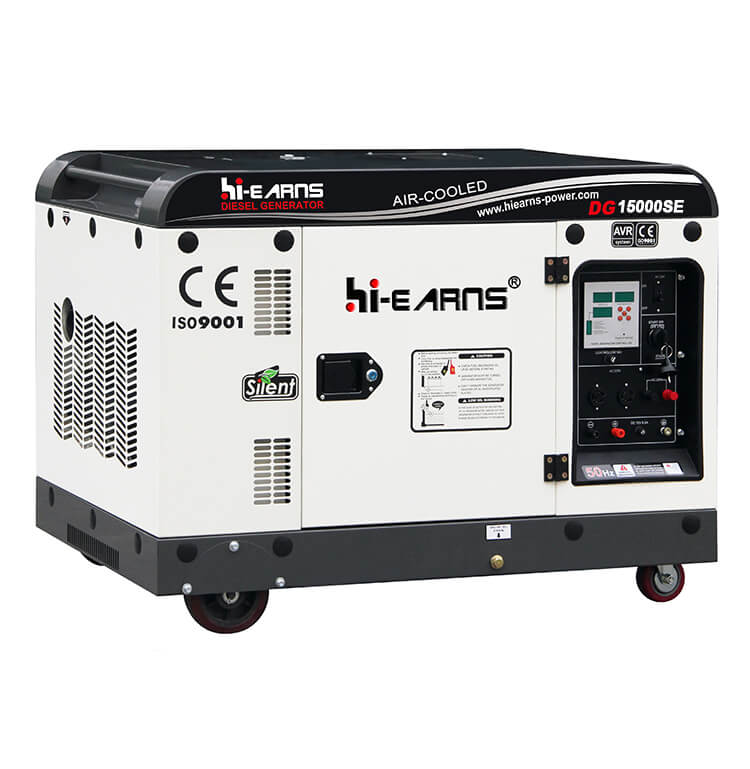
You want to get the most for your money when picking a generator. Fuel efficiency is very important. A 10kw diesel generator is better at turning fuel into electricity than gasoline or natural gas models. The Hi-earns 10KW Single Phase Diesel Generator DG15000SE shows how good new diesel technology is. Diesel generators usually use less fuel for each kilowatt-hour. This helps you save money, run the generator longer, and help the environment.
| Generator Type | Fuel Efficiency (per kWh) | Notes |
|---|---|---|
Diesel | More efficient than gasoline | Good for heavy loads and long use, costs less to run. |
Gasoline | Less efficient than diesel | Costs less to buy, good for small jobs, but costs more to run. |
Natural Gas | Cleaner burning | Becoming more popular, better for the planet, makes less pollution. |
Using less fuel saves you money.
Longer running time means fewer stops.
Good efficiency is better for the earth.
10kw Diesel Generator Fuel Efficiency
Efficiency Basics
And if you’re wondering why a 10kw diesel generator is so special, its because they burn fuel more effectively than other types. Diesel engines do something called compression ignition. This helps them convert diesel fuel to electricity with fewer losses. There is more energy per gallon of diesel fuel than in gasoline or natural gas. So you get a higher energy content per gallon of diesel.
A 10kw diesel generator, such as the Hi-earns DG15000SE, would typically be ~40% efficient. What that means: It coverts 40% of the fuel into useable electricity. Gasoline and natural gas-based generators don’t work as well. New technology makes diesel generators more fuel efficient. Features like common-rail fuel injection and digital controls help the engine use exactly as much fuel as it needs. These are systems that will vary the amount of fuel going in with how much power you want. This reduces waste and improves the generator’s operation.
Diesel generators operate in a different way from other varieties. Diesel fuel burns more slowly and at a higher temperature. This enables the generator to run longer and consume less fuel for a given power level. Diesel generators are capable of difficult loads as well. Even if you use them for months they continue to work effectively.
Here are some new things that help a 10kw diesel generator use less fuel:
High-pressure common-rail fuel injection gives you control over the exact amount of fuel your engine burns. This can result in a 5% reduction in fuel consumed by the generator.
Power from the generator responds to digital controls to alter fuel usage and timing. This is what keeps the engine humming along.
Exhaust gas recirculation lowers the engine’s temperature. This helps cut down on pollution without hurting how well it works.
Selective catalytic reduction scrubs the bad gases. It makes them safe objects, so the generator is cleaner and more efficient.
Real-World Performance
When you use a 10kw diesel generator, you want to know how much fuel it needs. The Hi-earns DG15000SE gives you real numbers you can trust. At half power, it uses only 0.53 gallons of diesel each hour. If you use more power, at 75 percent, it uses 0.65 gallons per hour. At full power, it uses 0.88 gallons per hour.
| Load Level | Fuel Consumption (gal/hr) |
|---|---|
50 Percent Load | 0.53 |
75 Percent Load | 0.65 |
100 Percent Load | 0.88 |
With a 30-liter tank, you can run the Hi-earns DG15000SE for up to 9.4 hours before you need more fuel. This long run time means you save time and money. You also get more power from every gallon of diesel.
Many things can change how much fuel your 10kw diesel generator uses:
| Factor | Description |
|---|---|
Load Factor | This is how much of the generator’s power you use; it works best at 75-80% of its top power. |
Engine Design | New things like electronic fuel injection and turbocharging help save fuel. |
Maintenance | Checking and changing filters and getting service stops fuel waste. |
Operational Conditions | Hot weather and high places can make it use more fuel; good cooling helps. |
You get the best fuel use when you run your diesel generator at about 75 to 80 percent of its top power. Taking care of your generator also helps it work better. Clean filters and regular service stop fuel waste and keep the engine healthy.
Diesel generators like the Hi-earns DG15000SE are known for using fuel well in the 10kw size. Experts and groups like the U.S. Department of Energy say diesel generators turn fuel into electricity better than gasoline or natural gas ones. This means you save money, get longer run times, and help the earth by using less fuel and making less pollution.
Tip: Always check how much power you are using and keep up with maintenance. This helps you save diesel fuel and keeps your 10kw diesel generator working well.
Diesel Generator vs. Gasoline and Natural Gas
Fuel Consumption Comparison
If you look at different 10kW generators, you will notice big differences. Diesel generators like the Hi-earns DG15000SE use less fuel than gasoline or natural gas ones. This means you get more power from each gallon of fuel. Experts and the U.S. Department of Energy say diesel engines work better because of compression ignition and more energy in their fuel.
Here is a table that shows how much fuel each generator uses at half power:
| Generator Type | Fuel Consumption (gal/hr) | Efficiency (%) |
|---|---|---|
Diesel | 0.53 | 40 |
Gasoline | 0.75 | 28 |
Natural Gas | 120 cu ft/hr* | 30 |
*Note: 120 cubic feet of natural gas is about the same as 0.9 gallons of gasoline.
You can see diesel generators use less fuel and work better. Gasoline generators need more fuel for the same amount of power. Natural gas generators use a different fuel, but they still use more than diesel.
Tip: Using less fuel saves you money and means fewer refills.
Output and Runtime
You want your generator to run for a long time without stopping. Diesel generators like the Hi-earns DG15000SE can run up to 9.4 hours on one tank at half power. Gasoline generators usually run for 6 to 8 hours with a similar tank. Natural gas generators can run as long as you have gas, but they use more fuel, so you might pay more.
Diesel generators give steady power for longer times.
Gasoline generators need refueling more often.
Natural gas generators can run nonstop but may cost more.
Experts say diesel generators are best for long and heavy use. You get better fuel use and save money. Diesel is a smart choice for backup power or places where you need electricity you can trust.
Cost and Savings
Fuel Costs
When picking a generator, you want to know fuel costs. Diesel generators like the Hi-earns DG15000SE use less fuel each hour than gasoline ones. You get more power from every gallon. But diesel fuel usually costs more than natural gas. If you use your generator a lot, natural gas can save you money over time. This is because natural gas has a lower price for each kilowatt-hour.
Natural gas generators are known for low fuel costs. Many experts and reports say natural gas is the cheapest way to run a generator for a long time. If you only look at fuel prices, natural gas generators cost the least. Diesel generators still help you save because they use fuel well. But diesel fuel prices can make them cost more to run than natural gas models.
Tip: Always check local fuel prices before you buy a generator. Prices can be different depending on where you live.
Long-Term Value
How long, you might consider, is your generator going to last? Diesel generators frequently have a longer lifespan than gasoline generators. Their engines are strong and can last you many years if well taken care of. This means you may save money on new generators in the long run.
Here are some reasons diesel generators are a good long-term choice:
They burn fuel efficiently, so you pay less for each hour of power.
They’re more durable, so you purchase fewer replacements.
They are good with heavy use and long running times.
Natural gas generators Save on fuel costs. Diesel powered generators are robust, and have a long life. People and businesses often choose diesel for backup power because it is dependable and economical over the long term.
Maintenance and Lifespan
Service Needs
If you pick a diesel generator, you want to know how hard it is to keep it working. Diesel generators do not need as much maintenance as gasoline or natural gas ones. You can see the differences in this table:
| Generator Type | Maintenance Frequency | Maintenance Complexity | Lifespan |
|---|---|---|---|
Diesel | Less frequent | Easier to service | Longer lifespan |
Gasoline | More frequent | More complex | Moderate lifespan |
Natural Gas | More frequent | More complex | Shorter lifespan |
Before encountering major problems, a diesel generator can operate for 15,000 to 20,000 hours. Gasoline and natural gas generators require servicing after 10,000-15,000 hours. That means you use a lot less time and money repairing a diesel generator. Some experts, such as the U.S. Department of Energy, point out that diesel engines are lower maintenance because their design is simpler.
Tip: Change the oil and inspect the filters frequently. This aids in the longevity of your diesel powered generator and lowers fuel consumption.
Durability
Diesel generators are known for lasting a long time and being tough. Many diesel models can work for 15,000 to 50,000 hours if you take care of them. This long life comes from a few important things:
| Durability Factor | Explanation |
|---|---|
Simpler Design | Fewer moving parts means less breaks. |
Lower RPM Operation | Running slower puts less stress on the engine. |
Water Cooling | Keeps the engine cool and protects the inside parts. |
Maintenance | Doing regular service, like oil changes, helps your generator last longer. |
Load Management | Using steady loads stops early damage. |
Operating Conditions | Clean and cool places help your diesel generator last even longer. |
A diesel generator gives you more value because it works for many years. If you use it for backup power or long jobs, you will save money and get good performance. Diesel engines can handle heavy loads well, so you can count on them when you need power.
Note: Always follow the service schedule in your manual. This keeps your diesel generator working well and saves fuel over time.
Safety and Environment
Emissions
When you run a diesel generator, you have to consider what gases it produces. Exhaust from diesel engines contains nitrogen oxides and microscopic particles. The gases can dirty the air. Diesel generators pumping too much pollution are banned is some places. In the United States, there are Tier 4 Final regulations for diesel generators that remain stationary. And these rules say do it cleaner, and do it with better fuel.
New diesel generators frequently have their own systems for reducing harmful gases. These systems can make the generator safer for earth. Some older diesel generators can be upgraded to comply with new rules. You don’t always have to purchase a new generator in order to comply with the law. Because you have to; it is the law of the locality you are in. However, emission controls can vary how much power from your generator you have access to. You may need to switch up how often you maintain — or compensate for — these systems.
Note: The Environmental Protection Agency (EPA) and others create these rules to protect people and the planet.
Noise and Operation
Diesel generators can be loud when they run. The Hi-earns 10KW Single Phase Diesel Generator DG15000SE has soundproofing to keep noise between 78 and 82 dB at 7 meters. This is quieter than many other diesel generators. You can use this generator in homes or offices where you want less noise.
It is important to use diesel generators safely. Always follow these safety steps:
| Safety Consideration | Description |
|---|---|
Proper Ventilation | Keeps exhaust away and stops carbon monoxide from building up. |
Adequate Clearance | Lets air move and stops the generator from getting too hot. |
Proper Grounding | Lowers the chance of electric shock. |
Fuel Handling Precautions | Stops fires and keeps refueling safe. |
Electrical Lockout/Tagout Procedures | Stops the generator from starting by accident during service. |
Fire Suppression Systems | Helps put out fires fast. |
Regular Inspections | Makes sure the generator is safe to use. |
Trained Personnel | Only let trained people use and fix the generator. |
Check your diesel generator before you use it. Make sure there is enough space around it and keep it in a place with good airflow. Be careful with diesel fuel to stop spills and fires. Regular checks help you find problems early and keep your generator safe.
Tip: Always read the manual and follow safety rules from the maker and local officials.
Choosing a Generator
Key Considerations
When you pick a generator, you need to think about a few things. Each kind—diesel, gasoline, or natural gas—has its own good points. You should choose the one that works best for you. Here is a table to help you compare:
| Factor | Diesel Generators | Natural Gas Generators |
|---|---|---|
Efficiency | Usually gives you more energy for your money. | Not as efficient, has less energy in the fuel. |
Availability | Easy to find, but storms can make it hard to get. | Found in cities, but not always in far away places. |
Maintenance | Costs less to take care of than gas engines. | Costs more because of spark plugs and wires. |
Lifespan | Can last many years if you take care of it. | Does not last as long as diesel engines. |
Safety | Not as easy to catch fire, so it is safer. | Catches fire more easily, especially if it leaks. |
Environmental | Makes more pollution, but new ones are cleaner. | Makes less bad gas for the air. |
Think about where you will use your generator. Diesel models are good for far away places. They are easy to refuel and work well. Natural gas generators are better in cities. They are good if you want less pollution and have gas lines nearby.
Tip: Always look at local fuel prices and rules before you buy. This helps you pick the best generator and avoid problems.
Best Use Cases
A 10kW generator can be used in many ways. Here are some common uses:
It can keep your house running during a power outage.
It can power things for camping or RV trips.
It can help at building sites with tools and lights.
It can give backup power to small businesses if the power goes out.
Diesel generators are best for far away places or when you need strong power. Natural gas generators are good in cities where you want clean air and steady fuel.
The best generator is the one that fits your needs. If you want it to last a long time and work hard, diesel is a good choice. If you care about clean air and easy fuel, natural gas might be better for you.
You have learned that a 10kW diesel generator uses fuel better than gasoline ones. Diesel engines can turn about 40% of their fuel into power, especially when working hard. This means you spend less money and can use the generator longer because diesel fuel has more energy. Diesel generators are great for tough jobs, long hours, and places where you need something strong. The Hi-earns DG15000SE gives you strong power, runs quietly, and is easy to move. This makes it a good pick for homes, businesses, and building sites.
| Feature | Hi-earns DG15000SE |
|---|---|
Rated Power | 10 kW |
Cooling System | Air Cooled |
Portability | Yes (wheels and handles) |
Noise Level | Silent operation |
Tip: Think about how much power you need, the price of fuel, and how often you will use your generator. Pick a model like the Hi-earns DG15000SE if you want power you can trust and that saves fuel.
FAQ
How much fuel does a 10kW diesel generator use per hour?
At half power, the Hi-earns DG15000SE uses about 0.53 gallons each hour. Diesel generators need less fuel than gasoline ones, says the U.S. Department of Energy.
Is a diesel generator safe to use at home?
You can use a diesel generator at home if you follow safety rules. Always read your manual for tips. The EPA says you should have good airflow and check your generator often to stay safe.
How long will a 10kW diesel generator last?
A diesel generator can last 15,000 to 20,000 hours if you take care of it. Experts say diesel engines work longer than gasoline or natural gas ones.
What maintenance does a diesel generator need?
Change the oil, look at the filters, and check your generator often. The U.S. Department of Energy says regular service helps your generator work well.
Does a diesel generator make a lot of noise?
The Hi-earns DG15000SE is quieter than many other diesel generators. It makes 78–82 dB of noise from 7 meters away. New diesel generators use special parts to make them quieter.