



Hotline 0086-519-86239986

All News
Your irrigation pump coughs and dies on the first hot morning of the season. Your mill grinds too slow, and the flour comes out uneven. These breakdowns cost you time, water, and money. So how do you choose the right single cylinder diesel engine for your machinery? This guide gives you a clear, practical decision path. You will learn to judge power needs, fuel efficiency, durability, maintenance demands, cost, and application fit. Apply these steps before you buy, and your equipment will run at the right speed, day after day.
Match engine power to your actual load in kilowatts. Leave a small margin so the engine does not work too hard.
Check fuel efficiency and local spare parts availability. These affect your running costs and downtime.
Choose the right start type and shaft type for your equipment. This ensures easy starting and proper fit.
Maintain the engine regularly, especially in dusty or hot conditions. Clean filters and cooling fins prevent problems.
Use the pre-purchase checklist to avoid costly mistakes. Confirm power, mounting, and certification before you buy.
A single cylinder diesel engine has one piston. That piston moves up and down inside a cylinder and does all the work by itself. Air enters the cylinder, the piston compresses it, and diesel fuel ignites under that pressure. The expanding gas pushes the piston down and turns the crankshaft. This simple design suits small pump sets and power applications. You get fewer moving parts, and that means fewer things can go wrong.
Most of these engines use an air-cooled, 4-stroke configuration. Cooling fins on the outside of the engine move heat into the air, so you never deal with a radiator or coolant. The block and head typically use robust cast iron construction. Cast iron holds its shape under heat and vibration, and it resists wear over long service hours. You can mount this engine on a pump frame, a mill base, or a boat hull and trust it to handle steady work.
One common myth says these engines are too small to be reliable. In truth, a single cylinder diesel engine delivers dependable power for its size. The design has fewer parts to fail, and the parts it does have are built heavy. Farmers around the world run them for hours each day on irrigation and milling duty.
Another myth claims they are hard to maintain. The opposite is true. One cylinder means one injector, one air filter, and one oil sump to check. You can learn the whole service routine in an afternoon. A quick look at the air filter and oil level each morning covers most of the daily care. When a problem appears, you can often trace it to a single cause instead of hunting through a complex system.
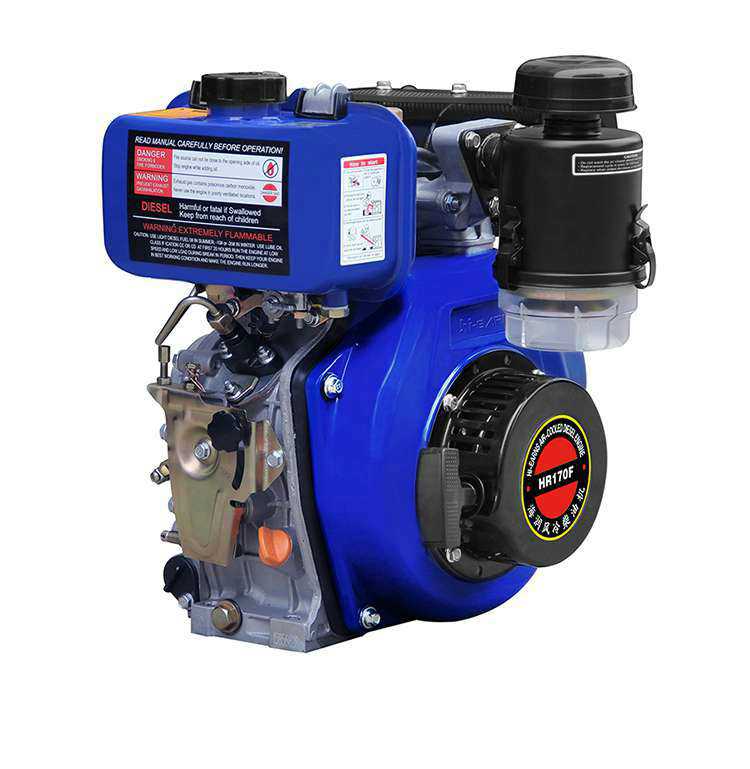
A nameplate horsepower rating tells you the engine's peak capability. It does not tell you what the engine will deliver on your pump, mill, or boat. Real field output depends on the load you attach, the altitude, the ambient heat, and the condition of the air filter. A 10hp engine driving an oversized pump may lug and smoke, while the same engine on a matched load runs smoothly for years.
Before you buy, work out the actual load in kilowatts. Check the pump or mill nameplate, or ask the equipment maker for the required shaft power. Then compare that figure with the engine's rated output. Leave a sensible margin so the engine does not run flat out all day. This step alone prevents most of the disappointment farmers feel after a purchase.
Hiearns builds a 4hp–25hp range to cover small and large duties. The table below shows where each model fits.
Model | Power | Typical fit |
|---|---|---|
170F | 4hp | Small pumps, light duty |
HR178 | 6–7hp | Medium pumps, small mills |
186FAE | 10hp | Irrigation, general power |
188FAE | 12hp | Heavier pumps, milling |
HR1105 | 20hp | Mixers, high-torque pumps |
HR998 | 25hp | Large pumps, demanding work |
Two models deserve special note. The 186FAE carries a 5-stage dry-wet combined air filter with 99.9% filtration efficiency. That filter protects the engine core and extends service life in dusty fields. The HR1105 delivers strong torque at low speeds, which suits high-torque equipment like mixers and water pumps.
Fuel is a running cost you pay every week. High-efficiency fuel injection systems optimize combustion and cut fuel consumption. Better combustion also means cleaner exhaust and less carbon buildup inside the cylinder. Over a season, a well-tuned single cylinder diesel engine saves real money on diesel.
Spare parts availability matters just as much as the spec sheet. Ask your dealer whether filters, injectors, and gaskets sit on the shelf locally. A cheap engine with no local parts support can sit idle for weeks waiting on a shipment. Check for ISO9001 and CE certification as quality and safety signals. These marks show the maker follows a documented quality system and meets recognized safety requirements.
Price tiers follow power. The 4hp 170F and 6–7hp HR178 sit in the entry tier, and they suit small plots, light pumps, and backup duty. The 10hp 186FAE and 12hp 188FAE form the mid tier, where most irrigation and milling work lands. The 20hp HR1105 and 25hp HR998 occupy the upper tier, and they earn their cost on mixers, large pumps, and demanding jobs. Each tier fits a job. Match the tier to the load, and you pay for capability you will actually use.
Irrigation pumps reward careful mounting. Check the mounting configuration before you buy, so the engine and pump align perfectly. A poor alignment wears the coupling and wastes power. Milling machines want steady speed under changing grain loads, and the mid tier handles this well. Fishing boats need a compact, dependable single cylinder diesel engine that starts easily on the water and sips fuel on long runs.
Start type changes how you use the machine. Hand start suits fixed installations and buyers who want a simple, low-cost setup. Electric start saves effort on boats, cold mornings, and equipment you start many times a day.
Shaft type decides what the engine can drive. A keyway shaft locks into a pulley or coupling with a key, and it suits pumps and mills with matching hubs. A taper shaft seats tightly on a tapered hub, and it fits many marine and pump applications. Confirm the shaft type on your equipment before ordering. A mismatch means extra machining or a return.
Heat, dust, and humidity test any engine. You can protect yours with a short routine. Check the air filter every morning in dusty conditions. Tap out the loose dust, and replace the element when it clogs. The 186FAE's 5-stage dry-wet combined air filter reaches 99.9% filtration efficiency, and a clean filter keeps that protection working. Change the oil on a shorter interval in hot weather. Heat thins the oil, and thin oil protects moving parts poorly. Watch the cooling fins too. Dust packs between the fins and traps heat. Brush them clean each week so air can flow.
The simple structure of a single cylinder diesel engine makes this work easy for you. One cylinder means one air filter, one oil sump, and one set of cooling fins to inspect. You do not need special tools or a service bay. A wrench, a brush, and a rag cover most of the routine. In humid climates, run the engine regularly. Regular running drives off moisture and keeps internal parts dry.
Hard starting usually points to fuel or air. Check the fuel valve first, then bleed air from the fuel line. A clogged air filter also causes hard starting, so inspect it before you touch the injector. White smoke at startup often means cold combustion, and it clears as the engine warms. Black smoke under load signals too much fuel or too little air. Clean the filter and check the injector spray pattern.
Power loss follows a similar path. A dirty filter starves the engine of air. A worn injector delivers a weak spray. Low oil or an overheated block also saps power. Work through these checks in order, and you will find the cause quickly. Most problems trace back to one simple item, and that is the quiet advantage of a single cylinder diesel engine.
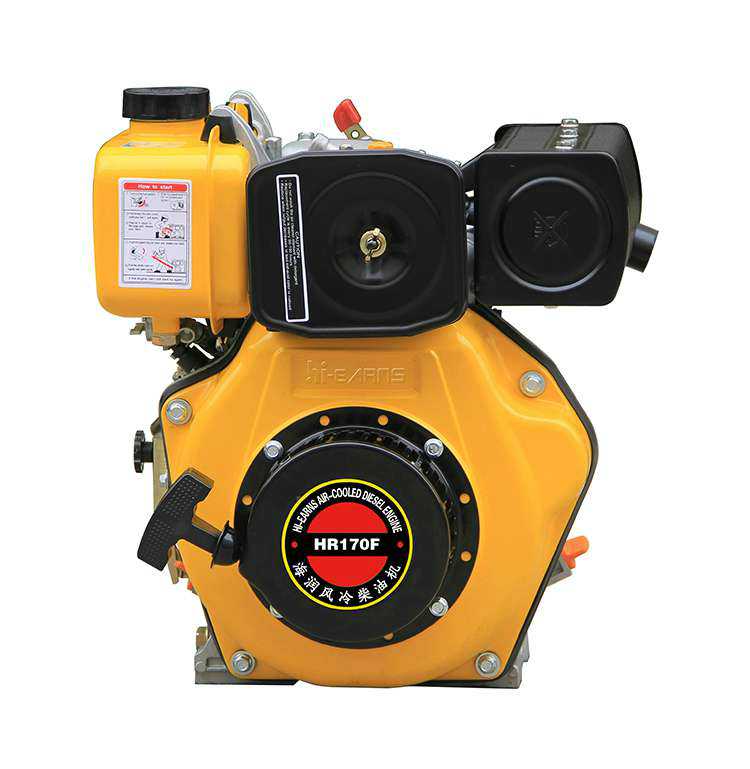
Three questions settle most engine decisions. First, what is the load? Second, what is the duty cycle? Third, are spare parts available? Answer these in order, and the choice becomes simple. Each question narrows the field until one model stands out.
Start with the load. Find the required shaft power of your pump, mill, or boat in kilowatts. Check the equipment nameplate or ask the maker. Compare that figure with the engine's rated output. A 10hp 186FAE suits general irrigation. A 20hp HR1105 fits a mixer that demands strong low-speed torque. A 25hp HR998 handles large pumps and demanding work. The 4hp 170F and 6–7hp HR178 cover small plots and light pumps. The 12hp 188FAE sits between the mid and upper tiers for heavier irrigation. Pick the model that covers the load with a sensible margin. An engine that runs flat out all day wears faster and burns more fuel.
Next, define the duty cycle. Ask how many hours the machine runs each day and how hard it works. A pump that runs a few hours on a small plot needs less engine than a mill that grinds from dawn to dusk. Continuous duty rewards fuel efficiency and cooling capacity. Intermittent duty tolerates a smaller, lighter unit. Write down your real hours, not your best-case hours. Honest numbers lead to a right-sized engine.
Then confirm parts availability. Check that filters, injectors, and gaskets sit on a local shelf. Ask your dealer about delivery times for common wear items. A dependable single cylinder diesel engine still needs a steady parts supply. ISO9001 and CE certification give you a quality and safety signal before you commit. A certified engine from an established maker carries less risk.
Run this checklist before you pay. Each line protects you from a costly mismatch.
Check | What to confirm |
|---|---|
Power match | Rated output covers your load in kilowatts with margin |
Fuel efficiency | Efficient fuel injection system suits your running hours |
Mounting | Engine and pump align perfectly on the frame |
Start type | Hand start for fixed duty, electric start for frequent starts |
Shaft type | Keyway or taper shaft matches your pulley or hub |
Certification | ISO9001 and CE marks present |
Walk through the list with the machine in front of you. Measure the mounting bolt pattern. Confirm the shaft type on your existing pulley. Decide whether you want hand start or electric start. Check the air filter design if your fields are dusty. The 186FAE's 5-stage dry-wet combined air filter reaches 99.9% filtration efficiency, and that protection pays off in dirty conditions. A clean filter also guards the engine core and extends service life.
Ask the dealer to demonstrate the start procedure. A quick demo shows you the controls and confirms the engine fires easily. Finally, weigh purchase price against running cost. A cheaper engine with poor fuel economy costs more over a season. A well-matched engine with local parts support keeps working when you need it. Apply this checklist, and you will choose with confidence.
You now have a clear path. Define your load in kilowatts, check your duty cycle, confirm local parts availability, and match the engine to the application. This sequence turns a confusing catalog into a short list of right answers.
Remember what a good engine really balances. Power, fuel cost, durability, and serviceability all matter together. Purchase price alone tells you little about the true cost of ownership.
So take the checklist to your next dealer visit. Measure the mounting pattern, confirm the shaft type, and ask for a start demonstration. A trusted dealer or technician will help you apply these steps. Do that, and your pump, mill, or boat will reward you with steady, dependable work for years.
Leave a sensible margin so the engine does not run flat out all day. Find your equipment's required shaft power in kilowatts, then pick a model rated above that figure. An engine working at its limit wears faster and burns more fuel. A modest cushion protects both the machine and your budget.
Choose hand start for fixed installations and simple, low-cost setups. Choose electric start for boats, cold mornings, and equipment you start many times a day. Electric start saves effort and time. Hand start keeps the setup simple. Match the choice to how often you actually start the engine.
Yes. A keyway shaft locks into a pulley or coupling with a key. A taper shaft seats tightly on a tapered hub. Confirm the shaft type on your existing equipment before you order. A mismatch means extra machining or a return, and either one costs you working days.
Check the air filter every morning and tap out loose dust. Replace the element when it clogs. The 186FAE's 5-stage dry-wet combined air filter reaches 99.9% filtration efficiency, and a clean filter keeps that protection working. Brush the cooling fins weekly so heat can escape.
ISO9001 and CE marks show the maker follows a documented quality system and meets recognized safety requirements. Local parts support keeps filters, injectors, and gaskets within reach. A dependable engine still needs a steady supply of wear items. Confirm both before you commit to a model.