


Hotline 0086-519-86239986

All News
You must weigh five decision areas before you import: application fit, technical specifications, regulatory compliance, total landed cost, and supplier reliability. Each area shapes the others, so treat them as one connected decision.
An air cooled diesel generator earns its own guide. The self-contained cooling system needs no radiator or coolant, maintenance stays simple, and the set moves easily between sites. These traits fit some applications better than others.
This guide gives you actionable criteria and comparisons. It does not recommend brands.
After reading, you will specify, vet, and import with confidence.
Match the generator to your site conditions. Hot or high places reduce power output. Choose a set with extra capacity.
Check fuel use at your normal load. A set that saves fuel at part load cuts your daily operating costs.
Confirm the required certifications for your country. Get the official documents before you ship. Missing papers can stop your goods at the port.
Calculate the total cost, not just the purchase price. Add shipping, duties, and maintenance. The cheapest set to buy may cost more to own.
Verify the supplier's warranty and parts support. Get the terms in writing. A reliable supplier keeps your site running.
An air cooled diesel generator rejects engine heat through fins and a belt-driven or shaft-driven fan. Air moves across the finned cylinder block and head, and the engine needs no radiator, water pump, or coolant. This design suits sites with limited water supply. It also favors portability, because the set carries less plumbing and weighs less than a liquid-cooled equivalent.
Stationary sets often use liquid cooling instead. Liquid cooling handles sustained high loads and tight acoustic enclosures well. Air cooled units therefore fit portable and decentralized use best: rental fleets, remote sites, and standby power where the set moves or sits far from a water source.
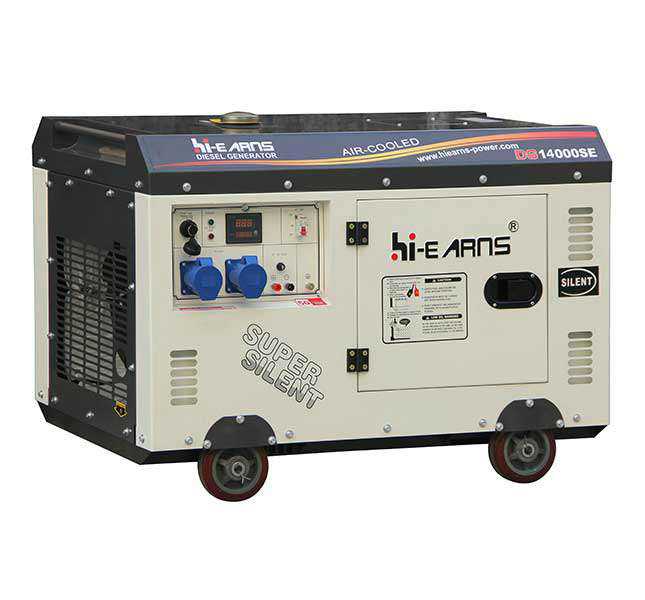
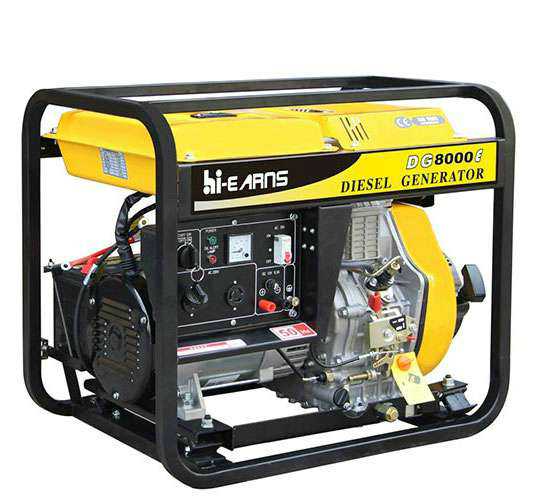
Manufacturers build these sets across a wide output range. Changzhou Hi-earns Mechanical & Electrical Co., Ltd., established in 2005, offers one example lineup. Outputs run from 1.8KW, 3KW, 6KW, 10KW, and 16KW up to 12KVA, 15KVA, and 60KVA. You can order open frame types for easy service access or silent types with soundproof enclosures for noise-sensitive sites.
The application list is broad. Civil works, industrial plants, and commercial buildings use these sets for prime and standby power. Telecom base stations rely on them where grid power is unreliable. Hospitals use them for backup, and military units use them for field power. Match the enclosure type and output to your site, and the air cooled diesel generator will cover most decentralized power needs.
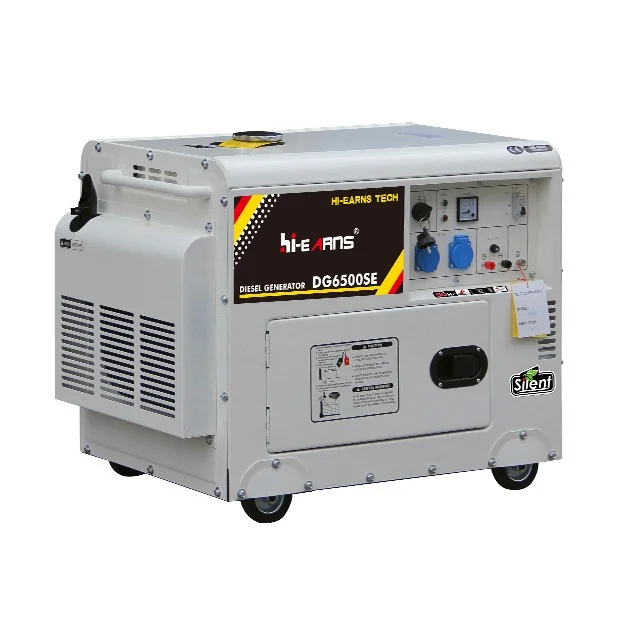
Read the nameplate kVA figure as a starting point, not a verdict. A generator rated at 12KVA delivers that output under reference conditions. Your site rarely matches those conditions. Evaluate three inputs together: the power rating, the site conditions, and the engine specification. A set that looks adequate on paper can fall short on a hot rooftop or at altitude.
Fuel consumption drives your operating budget more than purchase price does over a long service life. Ask the supplier for a consumption curve across the load range, not a single figure at full load. Most sites run at part load, and part-load efficiency varies between engine designs. A set with low fuel consumption at your typical load saves money every operating day.
Noise decides where a set can legally run. Open frame units suit fenced industrial yards and remote sites. Silent types with soundproof enclosures fit residential areas, hospitals, and other noise-sensitive locations. Request the sound pressure level at a stated distance, and confirm the measurement standard behind it.
Build quality shows in the details. Check the alternator insulation class, the control panel grade, and the frame coating. These details separate a set that lasts from one that fails early.
Manufacturers vary in flexibility here. Hi-earns, as one example, offers customization of engines, generators, and control systems. The company also cites low fuel consumption and compliance with global emission standards. Treat these claims as evaluation criteria, and verify them against documents for your destination market.
Air cooling depends on steady airflow across the fins. Dust, chaff, and debris block those fins and cut cooling capacity. Sites with high airborne dust need frequent cleaning and a pre-filter strategy. Confirm the service access for the fan and fin stack before you buy. A design that demands partial disassembly for cleaning raises your maintenance hours.
Durability follows from thermal margin. Ask how the manufacturer rates continuous output at your ambient temperature. A set with headroom handles a sustained load without overheating. A set pushed to its limit at reference conditions will derate on a hot day.
The air cooled diesel generator carries one structural advantage here: no coolant, no water pump, and no radiator to leak or corrode. That simplicity reduces failure points on remote sites. It also shortens the daily check routine to oil level, fuel supply, and airflow.
Match the enclosure to the environment. A silent canopy protects the set from rain and reduces noise, and it must still breathe. Confirm the enclosure design moves enough air for your climate. Then confirm the warranty covers the cooling system and the alternator, and get those terms in writing.
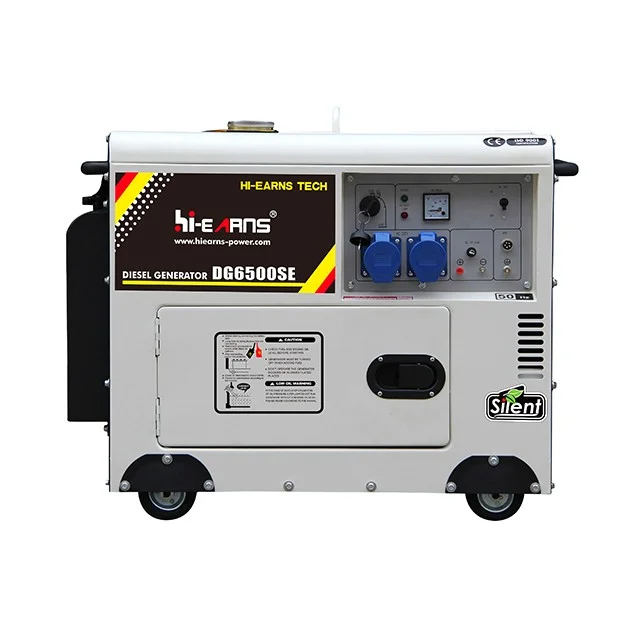
Your site conditions decide the real output of any set. Hot air is thin air, and thin air carries less heat away from the fins. A set rated at a comfortable ambient temperature will derate on a hot roof or in a desert yard. High altitude compounds the problem. The engine loses combustion efficiency as air density drops, and the cooling fan moves less mass of air with each pass. Ask the manufacturer for a derating curve against ambient temperature and altitude before you commit. Size the set with margin, and it will hold its rated load on the hottest day of the year.
Rain demands a weatherproof enclosure. An open frame set needs a shelter with cross-ventilation, and the shelter must keep driving rain off the control panel and alternator. A silent canopy with sealed panels handles outdoor duty better. Confirm the ingress protection rating of the enclosure and the control panel, and check that the canopy drains properly.
Winter operation brings its own checks. Diesel fuel clouds and gels in cold weather, so confirm the fuel system suits your lowest expected temperature. Battery capacity falls in the cold, and a cold engine cranks harder. Specify a battery heater or a block heater where winters bite. Run the set under load regularly, because a diesel engine that idles cold builds carbon and wears faster.
Duty cycle shapes the specification too. Prime power runs continuously at variable load. Standby power runs only during outages. Continuous rated sets carry heavier frames and larger cooling margins. State your duty cycle clearly, and the supplier can match the rating to your pattern.
Nameplate kVA alone will mislead you. Build your load list first, and work from real numbers.
Sizing input | What to record | Why it matters |
|---|---|---|
Running watts | Continuous draw of each load | Sets the base load |
Starting watts | Surge of motors and compressors | Sets the peak demand |
Load profile | Which loads run together | Sets the realistic peak |
Future load | Planned equipment additions | Sets the margin |
List every essential appliance: lights, refrigeration, pumps, motors, and the control systems that keep your site running. Record the running watts of each item. Then record the starting watts, because motors and compressors draw a surge several times their running load at startup. Add the surges that can occur together, and treat that sum as your peak demand.
Load management lets a smaller air cooled diesel generator serve a larger site. Sequence your startup: bring the heaviest motor online first, then add the rest. Shed non-essential loads during peak periods. This approach often beats buying a larger set, and it lowers fuel burn at part load.
Finally, add margin for growth and for derating. A set sized to your peak with headroom runs cooler, lasts longer, and handles the occasional extra load without complaint.
Your destination market sets the compliance bar, and you must clear it before the set ships. The European Union requires the CE mark, and the United Kingdom now asks for UKCA. The United States regulates engine emissions through the EPA, and Europe phases in EU Stage V limits for non-road engines. Confirm the exact mark your market demands, then request the test reports behind it.
A supplier's claim of "global emission standards" means little without paperwork. Ask for the certificate number, the issuing body, and the standard it references. Verify each document against the destination country's official register. A set that arrives without valid marks can face rejection at the port, and you carry that risk as the importer.
Customs clearance depends on a complete document set. You need a commercial invoice, a packing list, a bill of lading, and a certificate of origin. Add the emission certificate and the test report for the specific unit. Match the model number and serial number across every document, because a mismatch triggers inspection and delay.
Classify the goods correctly under your national tariff schedule. The duty rate follows the classification, and a wrong code costs you money or invites a penalty. Confirm the rules of origin before you claim any preferential rate. Keep digital copies of every document, and send the full set to your customs broker before the container leaves the factory.
The purchase price is only the first line of your cost sheet. Add freight from the factory to your port, then inland transport to your site. Add marine insurance, port handling, and customs brokerage. Then add the import duty your tariff classification triggers. A low unit price can lose its advantage once these lines land on the sheet.
Freight depends on volume and weight, so compare open frame and silent types on packed dimensions, not just output. Larger and containerized units bring extra evaluation points. Confirm the container carries valid CSC certification for international transport. Check the noise level against your site rules, because a set that fails a noise limit becomes a stranded asset. Build a total cost of ownership model that spans the full service life, and compare suppliers on that number.
Recurring costs accumulate quietly. Fuel dominates the operating budget, so ask for the consumption curve at your typical load. Engine oil, filters, belts, and batteries add predictable annual spend. Labor for routine service adds more, especially on remote sites.
Set a check schedule and treat it as a cost driver. Daily checks cover engine oil level, cooling airflow across the fins, and fuel supply. Weekly checks cover the air filter, belt tension, and battery condition. Service-interval tasks follow the manufacturer's schedule for oil changes, filter replacement, and valve clearance. Dusty sites shorten every interval, so budget for more frequent cleaning of the fin stack.
A well-maintained air cooled diesel generator spreads these costs over a long service life. Track them per operating hour, and the cheapest set to buy may not be the cheapest to own.
Sourcing from China puts several supplier types in front of you. Trading companies handle paperwork and logistics well, and they often carry several factories in one catalog. Factory-direct exporters give you engineering access and clearer accountability for the build. OEM arrangements let you apply your own brand and specify components. Each type fits a different importer profile, so match the type to your volume and your technical involvement.
Verify the warranty in writing before you pay a deposit. Ask for the covered components, the coverage period, the claim process, and the party who pays freight on replacement parts. A verbal promise of support means nothing at the port. Get the terms into the sales contract, and confirm the serial number range the warranty covers.
Scale signals delivery reliability. Hi-earns, as one example, reports a monthly production capacity of over 6,000 sets and best-selling status in both domestic and international markets. Treat such figures as a starting point, then ask for a recent production schedule and a reference list you can contact.
An air cooled diesel generator lives or dies on parts access. Ask the supplier for a spare parts list with part numbers, and confirm which items ship from stock. Filters, belts, injectors, and control boards matter most, because each one can stop a site. Request the typical lead time for each critical part, and write that commitment into the supply agreement.
Service networks decide your downtime. Map the nearest authorized service point to your site, and confirm the technicians hold training on your model. For remote sites, ask whether the supplier offers remote diagnostics through the control system. A control panel with remote monitoring turns a site visit into a phone call.
Finally, test the relationship before you scale it. Place a small order, request a technical query, and time the response. A supplier who answers engineering questions quickly at the start will likely answer them quickly after the sale.
Work through the decision chain in order. Define your application and environment first. Lock the technical specifications next. Confirm certifications for your destination market. Calculate total landed and lifetime cost. Vet the supplier and support plan last.
Run this checklist before you place an order:
Spec sheet verified against your load list
Certification documents confirmed with the issuing body
Duty and freight quoted in writing
Warranty and parts plan signed into the contract
A well-specified air cooled diesel generator, matched to its environment and backed by a reliable supplier, delivers dependable value across its full service life.
Build a load list first. Record the running watts and the starting watts of every essential item. Add the surges that can occur together. Then add margin for heat, altitude, and future equipment. This method beats picking a size from the nameplate alone.
No. The engine needs a steady flow of clean air across its fins, and it vents exhaust gas. Place the set outdoors or in a shelter with cross-ventilation. Route the exhaust away from windows, doors, and air intakes. Confirm the enclosure still breathes in your climate.
Less than a liquid-cooled set, because there is no coolant, water pump, or radiator. You still must keep the fins clear. Dust and debris block airflow and cut cooling capacity. Check the fin stack daily on dusty sites, and clean it on a set schedule.
Request the emission certificate, the test report for the specific unit, and the certificate of origin. Match the model and serial numbers across the invoice, packing list, and bill of lading. Verify each mark against your destination market's official register. A missing document can stop the container at the port.
A soundproof canopy adds weight and can restrict airflow if the design is poor. Ask the supplier for the derating figure for the silent version at your ambient temperature. Compare packed dimensions and noise level together. Then judge the set on total cost of ownership, not price alone.