



Hotline 0086-519-86239986

All News
Which specifications actually matter when you choose a diesel water pump? Check flow rate, head, power and efficiency, fuel consumption, engine specs, pump type and materials, solids handling, controls and safety, noise and emissions, size and weight, warranty and support.
Flow rate and head show whether the pump moves your water. Power, fuel use, and engine specs affect running cost. Materials and solids handling decide how the pump survives your water. Controls and safety keep the unit easy to run. Warranty and support protect your investment.
Check each spec against your real operating conditions. That habit separates a pump that works from one that fails.
Check flow rate and total dynamic head to ensure the pump moves your water efficiently.
Match engine power and fuel consumption to your job to control running costs.
Choose pump materials and solids handling based on your water conditions for durability.
Verify controls, safety features, and compliance to keep the pump easy and safe to use.
Confirm dimensions, warranty, and support before buying to avoid installation and service issues.
Start with your water source. Is it a pond, a canal, a well, a flooded basement, or a field channel? The source type sets the realistic flow you can draw. A shallow canal refills quickly and supports a steady draw. A narrow well may recover slowly and limit your rate. Confirm the source before you compare any diesel water pump.
Next, define the job in gallons per minute (GPM). Ask two questions. How much water must move? How fast must it move? For irrigation, estimate the area you flood and the time you allow for one pass. For dewatering, watch how quickly water rises in the pit. For water transfer, count the volume of the tank or basin and the fill time you want. Write the number down before you shop.
Use that GPM figure as a filter. A pump rated far above your need burns extra fuel and adds weight. A pump rated below your need runs flat out and never catches up. Size to the middle of your range, and leave a small margin for wear over time. If a pump already runs on the site, time how long it takes to fill a known container. That gives you a real GPM baseline.
Flow rate alone tells half the story. The pump must also push water against height and resistance. That combined resistance is total dynamic head (TDH). Calculate TDH as vertical lift plus friction losses plus elevation change. Vertical lift is the distance from the water surface to the pump inlet. Elevation change is the rise from the pump to the discharge point. Friction losses come from pipe length, pipe diameter, fittings, valves, and bends. Long runs, narrow pipe, and sharp bends each add loss. Measure each run in feet and note the pipe size. Sum every segment of your discharge line to get the total.
Many buyers read only the maximum lift on the label. That figure describes a best case with no pipe and no fittings attached. Your real installation has both. A pump that lists a high maximum lift may deliver very little flow once you add a long discharge line. Calculate your TDH first. Then check the pump curve. Choose a model that holds your required GPM at your calculated TDH, not at the headline maximum. Friction loss climbs quickly as pipe diameter shrinks, so a larger discharge hose often lowers TDH more than a bigger engine does.
Recheck the calculation when your layout changes. A longer hose, an extra elbow, or a higher discharge point all raise TDH. The pump does not change. Your duty point does.
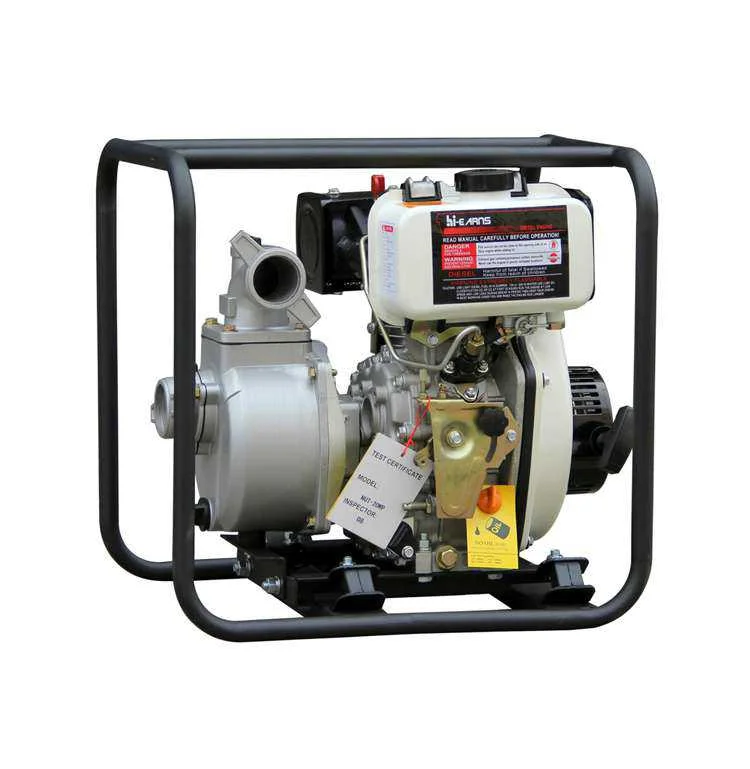
Hiearns self-priming models offer high flow and high lift for rice field irrigation and small-scale firefighting. The DP30E is a high-flow clear water pump suited to farm irrigation. Match a model like this to your GPM and TDH figures, and you get steady output instead of a surprise at the discharge end. A quick check of both figures before you order saves a return and a lost day in the field.
A pump under load needs steady turning force. That force comes from engine torque, not from a peak horsepower number on a brochure. Match the diesel engine's torque curve to your head and flow requirements. A pump that pushes water against high head demands strong torque at its working speed. An engine with a torque curve that falls off at that speed will bog down and lose flow.
Compare torque curves across engine options before you commit. Hiearns air-cooled engine series (173, 178, 186FA, 192) gives you several sizes to weigh against your duty point. A larger engine on a small pump wastes fuel. A small engine on a high-head job strains constantly. The DP15HCI 1.5-inch cast iron pump uses a 178 engine for durability under high pressure. That pairing shows how engine size should follow the pump's real workload.
Fuel consumption figures mean little without a reference point. Read them at rated load, the condition where the engine delivers its stated output. A figure quoted at half load flatters the pump and hides your true running cost. Ask the dealer for consumption at the load your job creates.
Then turn that number into money. Multiply fuel use per hour by your expected run hours and your local fuel price. A pump that runs eight hours a day for a season adds up fast. A slightly higher purchase price often pays back through lower fuel draw. Track consumption over the first weeks of operation on your diesel water pump. Real numbers from your site beat any catalog claim, and they tell you when service is due.
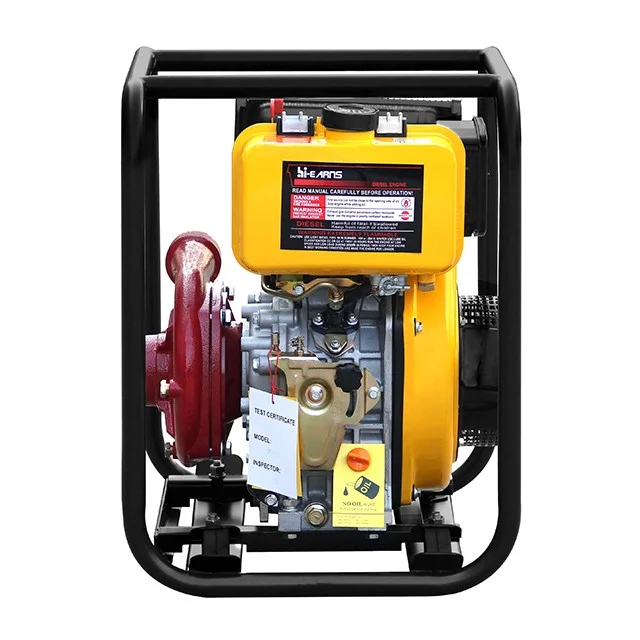
Engine type sets the foundation for how your pump performs over a long season. Check whether the unit uses a single-cylinder or multi-cylinder diesel engine, and confirm the model number against the manufacturer's data sheet. The Hiearns air-cooled engine series (173, 178, 186FA, 192) gives you a clear set of options to compare by displacement and output.
Cooling method deserves equal attention. Air-cooled engines use fins and a fan to shed heat. They need no radiator, no coolant, and no water jacket, so they suit portable field work and remote sites. Water-cooled engines hold steadier temperatures under continuous heavy load, which helps on long irrigation runs. Match the cooling method to your duty cycle and your site conditions.
Starting method is the third checkpoint. Recoil start keeps the unit simple and light. Electric start saves effort on cold mornings and suits older operators or frequent restarts. Confirm which method the quotation includes, and check whether the battery and charging system come standard with an electric-start diesel water pump.
Body material decides how the pump handles wear, weight, and transport. Compare the two common choices directly:
Material | Best fit | Trade-off |
|---|---|---|
Cast iron | Harsh sites, high pressure, long service life | Heavier to move |
Aluminum alloy | Frequent transport, quick setup | Less wear resistance |
Cast iron gives you strength and wear resistance in harsh environments. Aluminum alloy cuts weight for easier transport and installation. Verify the material grade too. ADC12 is a common aluminum alloy specification worth confirming on the data sheet, because grade affects casting quality and durability.
Solids handling matters most when your water carries silt or debris. Check the maximum spherical solid size the pump can pass. Some high-flow pumps pass soft solids up to half an inch. Larger debris can clog the impeller and stall the flow. Silty canal water, floodwater, and farm runoff all carry particles, so read this figure before you buy.
For dirty-water duty, look at Hiearns trash pumps and sewage pump options. The WP30V 3-inch sewage pump handles debris-heavy water that would choke a clear-water model. Match the solids rating to what actually flows through your source, and you avoid a clogged impeller on the first day of work.
Read the control panel before you buy. A good panel gives you basic controls: an ignition switch, a throttle lever, and a fuel shutoff valve. These parts let you start, adjust, and stop the pump without guesswork.
Check the protection features next. Low-oil shutdown guards the engine when the oil level drops. Overload protection trips the circuit when the pump strains. Some panels add a high-temperature cutoff. Ask the dealer which protections come standard and which cost extra.
Instrumentation tells you what the engine is doing. Look for an hour meter, an oil pressure indicator, and a fuel gauge. An hour meter helps you schedule service on time. A fuel gauge stops you from running dry mid-job. Confirm every gauge on the panel works before you accept delivery.
Noise and emissions rules change by country and by job site. Check your local regulations before you order a diesel water pump. Some areas set limits on sound levels near homes or schools. Others restrict engine emissions in certain zones. Ask your dealer for the sound level and emissions data for the model you want. Match that data to the rules where you plan to run the pump.
Compliance paperwork protects you at inspection time. Hiearns products are CE, ISO, and GS certified. These certifications show the pump meets recognized quality and safety standards. Request copies of the certificates with your quotation. Keep them on file for regulators, insurers, or project owners who ask for proof.
Measure your installation space before you order. Check the impeller diameter, shaft length, bolt-hole pattern, port diameter, and overall body length. The bolt-hole pattern matters most when you mount the pump on an existing frame or trailer. A mismatch there forces you to drill new holes or buy an adapter plate. Confirm the port diameter against your hose and fittings too. A pump with the right flow still fails the job if your discharge hose will not seal on the outlet.
Weigh the unit against how you plan to move it. A cast iron pump offers strength and wear resistance, yet it is heavier to lift onto a truck bed or carry across a field. Aluminum alloy models cut weight for easier transport. Check the dry weight and the wet weight, since a full fuel tank adds load. Plan your lifting points and your transport route around the heavier figure.
Ask what a standard factory quotation includes. A portable diesel water pump quotation typically covers the diesel engine, pump body, frame, fuel tank, basic controls, inlet and outlet fittings, and standard packaging. Read the list line by line. Missing fittings or a missing fuel tank turn into extra cost and delay.
Confirm four things before your order ships. First, state your water condition clearly, and say whether the water is clean or silty. Second, verify the fittings match your hoses. Third, ask which wear parts ship with the unit and which you should stock. Fourth, get written answers to your key application questions, including the solids size the pump passes.
Review warranty terms and after-sales support as part of total value. Check the coverage period, what the warranty excludes, and how fast the dealer can supply spare parts. A pump with strong local support keeps your job running when a seal or impeller wears out.
Carry a short checklist to the dealer. Write down your flow rate in GPM, your total dynamic head, the solids size your water carries, and your fuel budget. Add the engine model, body material, and warranty terms. These items turn a vague conversation into a focused comparison.
Prioritize specs by application. Irrigation rewards steady flow and fuel economy. Dewatering puts solids handling and portability first. Water transfer favors head and hose fit. Let your budget set the engine size, not the other way around.
Verify every spec against your real operating conditions. Confirm spare parts and service support before you buy any diesel water pump.
Write down your required flow in GPM and your total dynamic head. Then pick a model that holds that flow at that head. Hiearns offers sizes from 1.5 inches to 4 inches, so you can match the pump to your duty point instead of guessing.
Not safely. Silt and debris wear the impeller and clog the passages. Check the maximum spherical solid size first. Some high-flow pumps pass soft solids up to half an inch. For dirtier water, choose a trash pump or a sewage model such as the WP30V 3-inch pump.
Ask your dealer which wear parts ship with the unit and which you should stock. Seals and impellers wear first on any diesel water pump. Local spare-part availability keeps your job running when a part fails mid-season.
Yes, if you match the cooling method to the duty cycle. Air-cooled engines suit portable field work. Water-cooled engines hold steadier temperatures under continuous heavy load. Check the fuel tank size against your run hours, and refuel safely between shifts.
Confirm four things: your water condition (clean or silty), the fittings that match your hoses, the wear parts included, and written answers to your application questions. Also request the CE, ISO, and GS certificates and review the warranty terms.