



Hotline 0086-519-86239986

All News
An air cooled diesel generator can work in hot climates, but expect reduced efficiency, faster wear, and the need for smarter maintenance. Ambient heat narrows the gap between engine temperature and outside air. This gap drives heat removal. Picture a 7.5KW unit running on a 110°F day. The engine runs much hotter than it would at 70°F. So the answer is yes, but with real limits. You need to understand four things: cooling physics, environmental challenges, design solutions, and maintenance requirements. Each factor shapes how well your generator performs when temperatures climb. These insights help you plan better. Stay informed.
Air cooled diesel generators work in hot climates but lose power and efficiency.
Derate power by at least 20% for continuous use above 100°F to prevent overheating.
Clean cooling fins every 50 hours in dusty conditions to maintain airflow.
Check oil and battery levels more often in extreme heat to extend generator life.
Use proper maintenance and smart operation to keep your generator running reliably.
Heat moves from hot to cold. The bigger the gap, the faster heat leaves. Your engine relies on this principle. Air flows across cooling fins. The fins pull heat from the cylinder head and oil. That heat then moves into the surrounding air.
Now picture a 100°F day. The air around your generator is already warm. The temperature gap between the engine and the air shrinks. Heat transfer slows down. The cylinder head runs hotter. Engine oil runs hotter too. This happens even when the generator works at the same load.
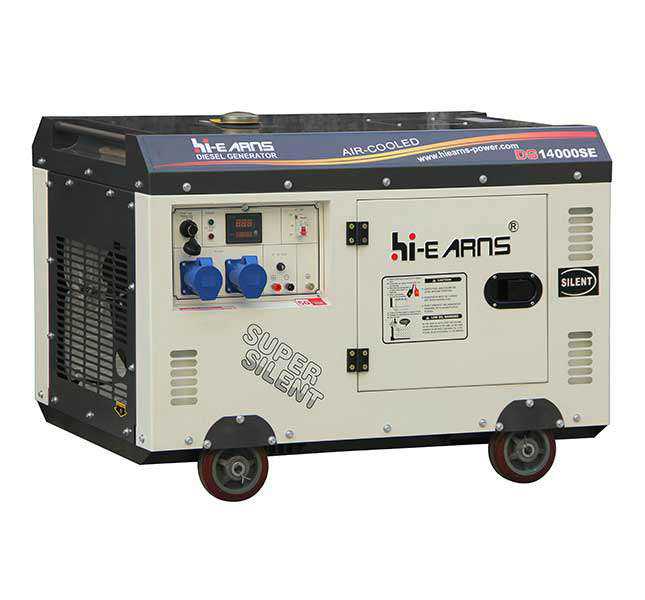
The Hi-earns DG11000SE shows this clearly. Its engine depends on airflow across fins. At cooler temperatures, the differential is wide. At high heat, that differential shrinks. The engine cannot shed heat as fast. Temperatures inside the engine climb.
Turbochargers make this worse. They compress air that is already hot. Combustion temperatures rise further. The cooling system must work harder. It has less capacity to do so.
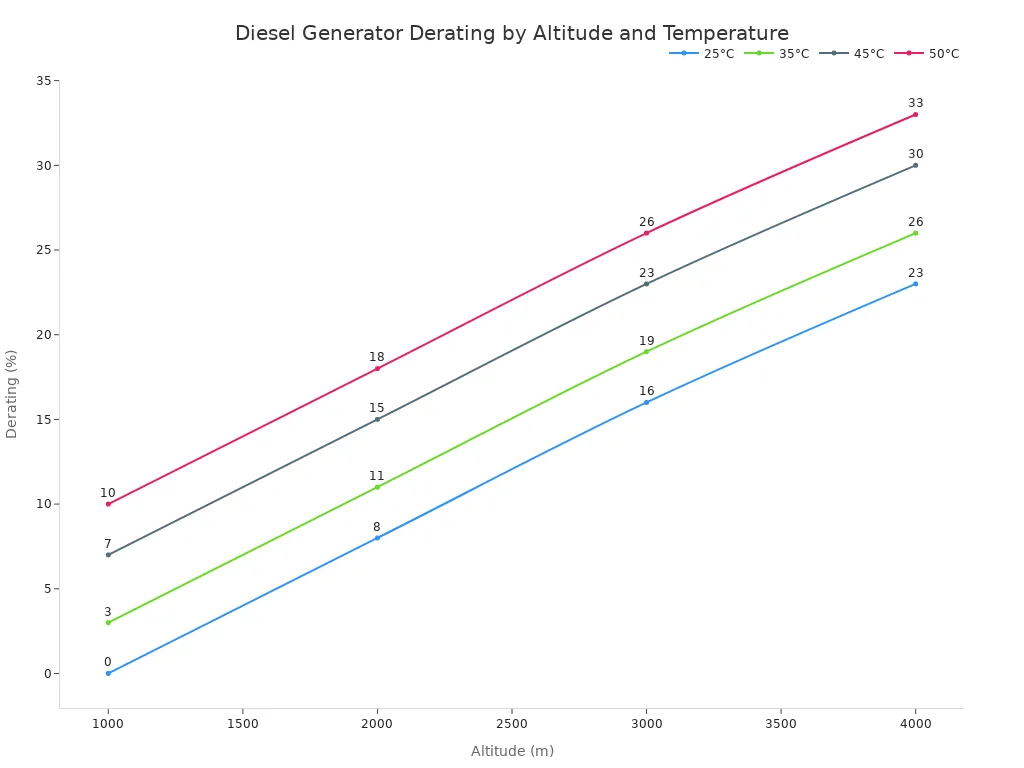
Heat reduces power. The exact derating depends on ambient temperature and altitude. ISO 3046 sets derating guidelines for height above sea level. At 1000 meters and 35°C, you lose 3% of power. At 2000 meters and 45°C, that loss reaches 15%. At 3000 meters and 50°C, you lose 26%. These figures come from ISO 3046, a named public standard.
Fuel consumption also rises. In heat, the mixture runs richer. You burn slightly more fuel for the same output.
Here is your takeaway. An air cooled diesel generator can deliver rated power in bursts. For continuous duty in high heat, derate appropriately. Check your manual for specific derating charts. Plan your load accordingly. This protects the engine and extends its life.
Heat is not the only enemy. Dust, sand, and humidity team up with high temperatures. They make life harder for any air cooled diesel generator. Each stressor attacks the cooling system in its own way.
Dust is the most visible threat. Fine particles settle on cooling fins and block airflow. A clogged radiator core cannot remove engine heat. This is a common cause of generator overheating. Restricted airflow makes the problem worse. The cooling fan pulls air through dirty fins. Less air moves across the metal. Engine temperatures climb fast.
Dust and debris block airflow through the radiator core.
A dirty core prevents effective heat removal.
Restricted airflow reduces cooling capacity and speeds overheating.
The DG11000SE has a silent canopy. This design helps manage heat. But the canopy can trap heat when airflow is obstructed. Dust builds up inside the enclosure. Hot air recirculates instead of escaping. The engine runs even hotter.
Air-cooled generator structures need routine cleaning of the heat sink and fan so that accumulated dust does not reduce heat dissipation effectiveness.
Humidity adds another layer of trouble. Humid air holds more water vapor. That vapor displaces oxygen entering the engine. Diesel combustion needs oxygen to burn fuel well. Less oxygen means lower combustion quality. Power output drops. Higher humidity also lowers air density. The engine draws in less air mass per intake cycle. This slightly reduces power and efficiency in very damp conditions.
Open ventilated systems face the worst of it. Dust and moisture enter freely. This contamination degrades performance over time.
When heat, dust, and humidity combine, wear accelerates. Critical parts suffer first. Piston rings, injectors, and bearings take the hardest hit.
Piston rings seal the combustion chamber. They rely on clean oil and stable temperatures. In hot, dusty conditions, oil breaks down faster. Abrasive particles slip past filters. Rings wear quicker. Compression drops. The engine loses power.
Injectors spray fuel into the cylinder. Heat stresses their internal components. Dust clogs tiny nozzle openings. Humidity can corrode metal surfaces. Poor spray patterns follow. Fuel burns unevenly. You get more soot and less efficiency.
Bearings support rotating parts. They depend on proper lubrication. High temperatures thin the oil film. Contaminants embed in bearing surfaces. Friction rises. Eventually, bearings fail.
These problems do not appear overnight. They build slowly. Each hot day adds stress. Each dusty hour wears metal. The generator keeps running. But its lifespan shortens with every neglected maintenance cycle.
You can slow this damage. Clean cooling fins often. Check air filters daily in dusty areas. Watch for signs of overheating. Address small issues before they become major failures. Your generator works hard in tough conditions. Give it the care it needs.
You can take positive action to keep your generator reliable in heat. The solution starts with choosing the right size and derating correctly. It continues with design features that help the cooling system handle harsh conditions.
Choosing the correct generator size matters more in hot climates. You must plan for power loss caused by heat and altitude. ISO 3046 provides clear derating guidelines. Derate appropriately for continuous operation in high heat. This protects your engine from overheating.
Ignoring derating causes real problems. A Colorado hospital used a 750 kW generator at 6,200 feet elevation. The unit could deliver only 600 kW. That 20% shortfall forced manual load shedding for 18 hours during a winter storm outage. A Nevada data center faced similar issues. Sea-level-sized generators could not reach rated output. The facility spent enormous money on extra capacity. Operations were delayed.
Location | Rated Capacity | Actual Output | Shortfall | Consequence |
|---|---|---|---|---|
Colorado hospital (6,200 ft) | 750 kW | 600 kW | 20% | Manual load shedding; ran near capacity for 18 hours |
Nevada data center (4,500 ft) | Sea-level-sized | Below rated | Not specified | Purchased extra capacity; delayed operations |
Lower air density at elevation reduces cooling ability. The radiator struggles to shed heat into hot, thin air. This becomes critical during hot summer months. Engine temperatures climb. Overheating risk rises significantly.
Operational fixes help you avoid these problems. Use load management to prevent max-load spikes. Install an optional ATS for automatic load shedding. A remote control system lets you respond quickly to changing loads.
Design features make a real difference in hot weather. Oversized cooling fins move more heat away from the engine. High-temperature seals protect components from thermal stress. The DG11000SE uses a silent canopy designed to help manage heat. The engine stays cooler as a result.
Electric start systems provide reliable power in heat. The battery cranks the engine easily. Manual pull starts become difficult when temperatures climb. Electric start removes that problem entirely.
Quality certifications confirm performance. Check for safety and efficiency marks when selecting a unit.
Operating in extreme heat makes it harder for the radiator to dissipate heat into the already hot air. An air cooled diesel generator needs proper design to handle these conditions. Right-sizing, derating, and smart cooling features keep an air cooled diesel generator running strong in demanding environments.
Dust is your generator's silent enemy. It coats cooling fins and blocks the airflow your engine needs. Clean those fins frequently in dusty conditions. Use compressed air or a soft brush to remove debris. Never bend the fins. Bent metal restricts airflow and causes overheating.
External cleaning is performed annually, but radiators in dusty or agricultural environments require more frequent external cleaning because debris blocks airflow through the fins. Cleaning should be done with low-pressure water or compressed air, avoiding high pressure that can damage the fins.
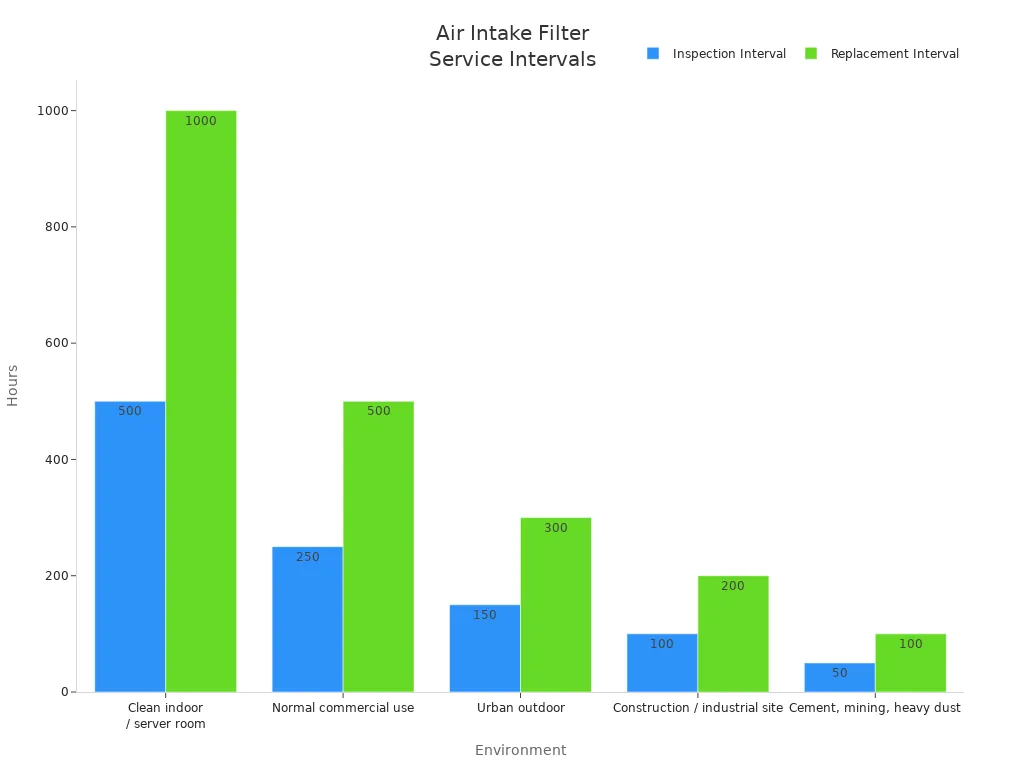
Air filters need regular inspection in hot, dusty places. Check the filter at every refueling stop. Replace the filter based on hours, not the calendar.
Environment | Inspection Interval | Replacement Interval |
|---|---|---|
Clean indoor | Every 500 hours | Every 1,000 hours |
Normal commercial | Every 250 hours | Every 500 hours |
Urban outdoor | Every 150 hours | Every 300 hours |
Construction site | Every 100 hours | Every 200 hours |
Heavy dust | Every 50 hours | Every 100 hours |
Heat breaks down oil faster. When ambient temperatures exceed 35°C, shorten your oil-change interval. Inspect oil condition every 150–200 hours. Choose a high-temperature rated oil for your air cooled diesel generator.
Check battery electrolyte levels more often. Heat speeds evaporation. Top off with distilled water as needed. Keep terminals clean and tight.
Here is your practical checklist. Clean fins frequently in dust. Inspect the air filter every 50 hours in heavy dust. Check oil every 150–200 hours in extreme heat. Test battery electrolyte weekly. Follow these steps and your generator will reward you with reliable service.
An air cooled diesel generator works in hot climates when you respect its limits. The answer stays yes, but. Heat cuts cooling capacity, dust speeds wear, and fuel burns faster. You can manage all three. Derate for continuous loads in high heat. Clean fins often. Watch oil and battery levels. These habits keep power flowing.
Check your manual for derating charts. Every engine has its own numbers. If you need a portable unit, look at the Hi-earns DG11000SE. Its protective canopy and electric start handle tough conditions well. Smart choices and steady care keep your generator running through the hottest days.
You can hit rated output for short bursts. Continuous duty is different. Derate appropriately for high heat. A 7.5KW unit should carry roughly 6KW for steady loads. This protects the engine from overheating and extends its life.
Power loss depends on ambient temperature and altitude. ISO 3046 shows a 26% loss at 3000 meters and 50°C. Check your manual for exact charts.
The canopy can trap heat when airflow is blocked. Dust buildup inside the enclosure makes this worse. Clean the fins and intake often. Keep the airflow path clear.
Clean the fins frequently in dusty conditions. Use compressed air or a soft brush. Never bend the fins. Bent metal restricts airflow. Inspect the air filter every 50 hours in heavy dust.
Yes, fuel consumption rises slightly in heat. The mixture runs richer. Expect that number to climb in extreme heat.