



Hotline 0086-519-86239986

All News
A reliable diesel engine manufacturer in China shows four traits. It demonstrates technical competence, application-specific expertise, regulatory compliance, and robust after-sales support. This post turns those four criteria into a concrete, repeatable evaluation method. You can apply the method to any supplier you shortlist.
Your stake is practical. Engine reliability drives equipment uptime and total cost of ownership. It also decides whether your machines meet emissions rules in target markets. A weak supplier choice shows up later as downtime, warranty disputes, and rejected shipments. A structured evaluation protects your project before you place the order.
Check the engine serial number on the manufacturer's official website to confirm the engine is legitimate.
Match the engine to your equipment's needs by reviewing the torque curve and fuel consumption at your expected load.
Verify emissions certificates for your target market and ensure they cover the exact model you plan to buy.
Evaluate after-sales support by checking parts availability, warranty terms, and technical assistance.
Compare total cost of ownership over the engine's life, not just the purchase price.
The market splits into two broad tiers. Domestic leaders include Weichai Power, Yuchai Group, Yunnei Power, Anhui Quanchai, and Jichai. Joint venture and state-linked players include Shanghai Diesel Engine (SDEC-SAIC), plus Cummins through DCEC and CCEC, Isuzu through Qingling Isuzu, Yanmar, and Deutz joint ventures. Kangjin Power's procurement guide notes that Weichai Power holds a dominant position in heavy-duty diesels with 10L to 15L engines and thermal efficiency surpassing 52%. The same source describes Yuchai Group as strong in the medium-duty sector and Cummins joint ventures as covering 2.8L F-Series to K-Series engines for mining.
A third tier matters just as much. Chinese manufacturers excel in single-cylinder air-cooled diesel engines. Specialists such as Hi-earns (Changzhou Hi-earns Mechanical & Electrical Co., Ltd., founded 2005, ISO9001 and CE certified, 4–25hp air- and water-cooled range, 6,000+ sets monthly, exported to 100+ countries) illustrate this specialist tier. Treat every brand here as a neutral example, not an endorsement.
Tier shapes four things you will live with. Scale determines whether a factory can absorb your order volume and hold lead times. Engineering depth decides how much application support you receive during integration. Parts availability depends on the distribution network behind the engine. Cost positioning reflects volume, brand premium, and the complexity of the platform.
Match the tier to your program. Large fleets with heavy-duty duty cycles suit the domestic leaders and joint ventures. Small equipment builders often get faster response and better cost efficiency from a specialist diesel engine manufacturer. Verify the claims yourself before you commit.
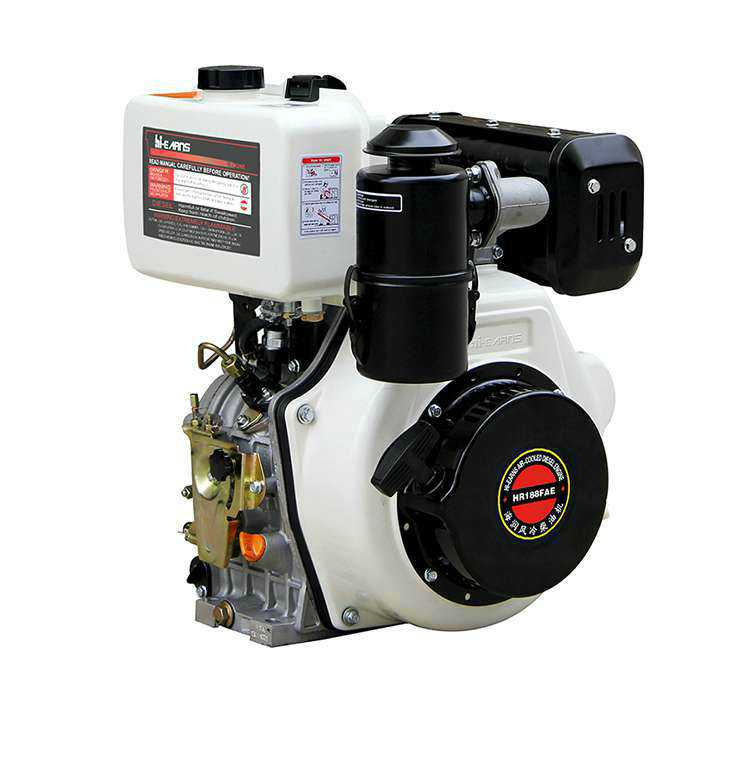
Start with the engine nameplate serial number. Every legitimate unit carries an engine serial number (ESN). You can check that number through the manufacturer's official service portal. A number that returns no record is a stop signal. So is a record that does not match the model printed on the plate. Ask the supplier to photograph the plate before shipment and send the image with the commercial documents. This step takes minutes and closes a common gap.
Remanufactured units need a separate check. Ask for factory specifications that list every part used in the rebuild. A credible rebuild uses new name-brand components that meet or exceed OEM specifications. Vague answers about "premium parts" tell you little. Request the parts list in writing. Compare it against the original build sheet for the engine family. Then ask whether the unit was tested and inspected before shipping, and clarify the warranty terms in writing.
Begin with the driven equipment, not the engine. The pump, generator head, or implement sets the power and speed you need. Select an engine that meets that demand with a sensible margin. Do not default to the largest unit on the list. Oversizing adds weight, fuel burn, and cost without adding uptime.
Low-speed torque matters most for pumps and generators. A generator runs at a fixed speed for long periods. Match the engine to that steady-state profile. Over-specifying the fuel system raises cost without improving reliability. Construction and agricultural machinery face heavy, variable loads across a wide speed range. Those machines need an engine rated for off-highway duty cycles, with a torque curve that holds up under repeated load swings.
Ask for the torque curve, not just the peak rating. The curve shows how much torque the engine delivers at the speeds your equipment actually uses. A flat curve across the working band usually serves variable-load machinery better than a high peak confined to one narrow speed.
Shaft and start options decide whether the engine fits your machine. Keyway shafts suit direct coupling to pumps and generators. Taper shafts suit other drive arrangements. Hayes Couplings lists flywheel coupling options for irrigation pumps and marine transmissions, plus bearing-supported stub shafts for side-load drives. Confirm mounting dimensions, shaft configuration, and tank position on the drawing, not from the catalog line.
Starting method follows the site and the operator. Hand start, often called recoil start, suits portable equipment with no battery. Electric start suits machines with a battery and a fixed installation. Many small engines offer both, so state your preference at the quotation stage.
Fuel system matching deserves the same care. Goldfarb Inc. notes that industrial generators in the 4 to 9 liter displacement range commonly use a Bosch CP3 pump matched to the fixed-speed duty cycle. Agricultural machinery needs the OEM part number for the specific tractor or harvester model. Buyers should also verify material compatibility for biodiesel blends above B20.
Document the duty cycle you expect. State the hours per day, the load profile, and the ambient conditions at the site. A supplier who asks for these details is thinking about fit. A supplier who quotes a model number without asking is quoting a catalog page.
Emissions tier is part of fit. Perkins, for example, offers engines in Tier 3 and Tier 4 Final configurations depending on model year, per HD Engines. Confirm the tier your target market requires before you shortlist a diesel engine manufacturer.
Build a comparison sheet before you request quotes. Five metrics carry the most weight: torque curve, fuel consumption, maintenance intervals, warranty terms, and total cost of ownership. FleetRabbit's diesel-versus-gas fleet analysis shows why cost alone misleads. Its five-year total cost of ownership figures put a diesel truck at $96,260 against $89,535 for a gas truck. After resale value, the gap narrows to $1,975 in diesel's favor. Purchase price and maintenance run higher for diesel, yet fuel savings and stronger resale recover much of that gap.
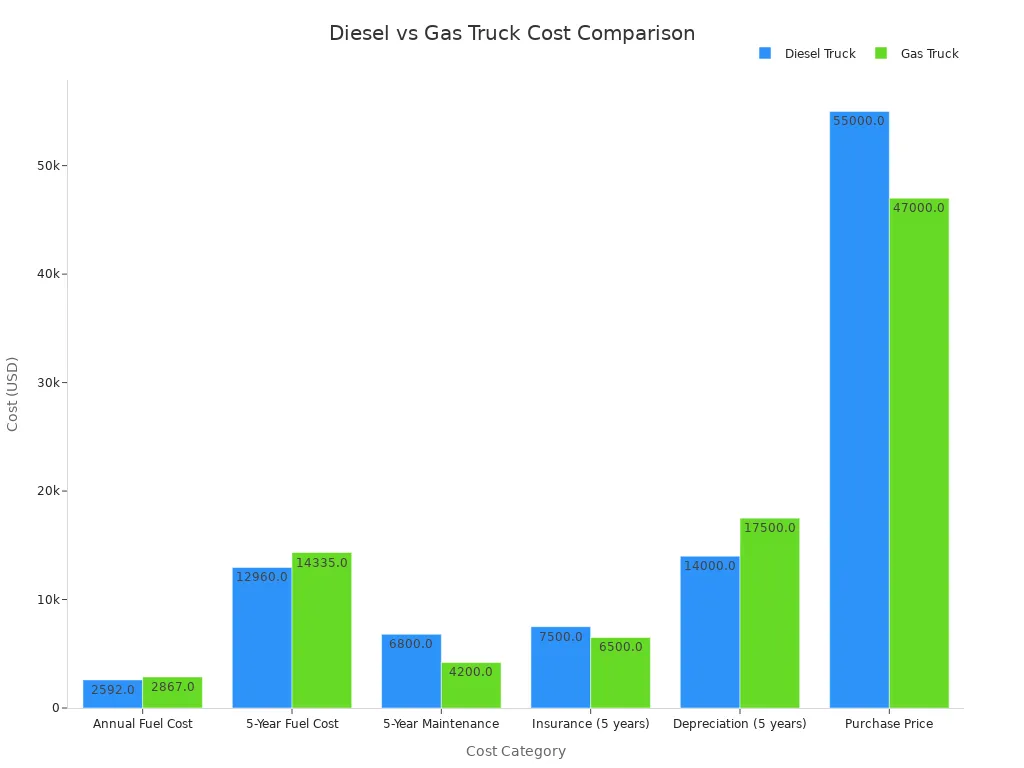
Apply the same logic to your engine purchase. Ask each supplier for a torque curve across the working speed band, not a single peak figure. Request fuel consumption at your expected load, maintenance intervals in hours, and warranty terms in writing. Then model total cost of ownership over your planned service life. A lower sticker price often loses once you add fuel, parts, and downtime.
Specifications only help when you know the load they assume. Goldfarb Inc. defines load factor as actual power output divided by maximum rated output. A 500-hp engine producing 350 hp runs at a 70 percent load factor. That ratio drives thermal efficiency and mechanical stress. ISO 8528-1:2018(E), Section 14.3.3 caps prime power at a 70 percent average load factor over 24 hours. Exceed that average and the unit de-rates.
Fuel data needs the same scrutiny. Goldfarb Inc. places peak fuel efficiency in the 70 to 80 percent load range. At 7 percent load, consumption effectively doubles relative to the work done. Read every consumption figure against its stated load. A number without a load condition tells you little.
Treat online marketplace listings as leads only. Verify quality and supplier claims before you purchase. Request test reports, serial numbers, and warranty documents from any diesel engine manufacturer you shortlist.
Construction machinery punishes an engine in ways a generator never does. Loads swing constantly, and the machine spends part of every shift at idle. EVS InMotion's whitepaper on compact excavators shows the pattern clearly. A 1–10-ton mini excavator burns roughly 2.2 L/h at low load, 3.4 L/h at medium load, and 4.5 L/h at high load, with idle consumption of 0.8–1.2 L/h. The same source reports that compact diesel excavators idle for 20–40% of the shift. That idle time pushes effective averages into the 3–4 L/h range even when the digging work looks light.
Load condition | Diesel fuel consumption |
|---|---|
Low load | ~2.2 L/h |
Medium load | ~3.4 L/h |
High load | ~4.5 L/h |
Idle | 0.8–1.2 L/h |
Match the engine's duty rating to this reality. Mid America Engine separates light-duty engines for variable loads and short runtimes, medium-duty engines for moderate loads with frequent starts and stops, and heavy-duty industrial engines for continuous, high-load operation. The same source advises that a properly sized engine should run at 70–85% of rated capacity during normal use. Size below that band and you carry excess weight and fuel burn. Size above it and you shorten service life.
Emissions rules vary by market, and construction equipment often faces stricter tiers than stationary engines. Confirm the tier your destination country requires before you shortlist any diesel engine manufacturer. Ask for the certificate itself, not a claim on a datasheet. Check that the certificate covers the exact model and power rating you plan to buy.
Certification also interacts with duty cycle. An engine certified for a steady load may not hold that certification under the stop-start pattern of a excavator or loader. Request the test conditions behind the certificate. Then compare them against your real load profile. A supplier who cannot explain the gap between test conditions and field conditions leaves you exposed at the border.
Certificates give you a first filter, not a final answer. Ask for the documents that match your market and your product type. SRGENSET lists the core set: ISO 9001 for quality management, ISO 14001 for environmental management, and ISO 45001 for occupational health and safety. It also lists CE certification for open, soundproof, and water-cooled generator sets, plus SGS audit reports that verify manufacturing capability, production management, and quality control. A single-cylinder supplier cited on LinkedIn describes ISO 9001 coverage across its 3 to 45 HP line and notes that EPA, CE, or other regional approvals may apply depending on your destination.
Verify each certificate rather than filing it. Request a scanned copy showing the factory name and validity date. Cross-check the certificate number on the issuing body's website, such as TÜV, SGS, or a local accreditation body. A certificate that fails this check is a warning sign about the whole relationship.
After-sales infrastructure decides how fast you recover from a failure. Use this checklist when you compare candidates.
Evaluation Area | What to Check |
|---|---|
Parts availability | Common parts sit on the supplier's shelf, ready to ship |
Sourcing networks | Global connections for rare or legacy components |
Technical expertise | Advisors who identify parts by engine model and serial number |
Quality and authenticity | OEM parts with traceability documentation |
Pricing and turnaround | Same-day quotes and expedited shipping |
Warranty | A strong term, such as 18 months, per Diesel Services of America |
A LinkedIn supply-chain post adds five questions worth asking. Ask for the output a factory can hold without adding shifts, not its peak capacity. Ask how it sequences a repeat order when two customers' peak seasons overlap. Ask for written acceptance criteria before the first container. Ask which purchasing terms still work in year two, including spare parts lists and knocked-down configurations. Ask whether manuals, pre-sale training, and after-sales support come standard.
Single-cylinder and small-engine specialists occupy a distinct slot. They sit alongside full-line manufacturers rather than beneath them. Kangjin Power notes that sourcing directly from a massive factory often creates hurdles around minimum order quantity and technical support for single-unit or small-batch replacements. Specialized distributors close that gap. They match the engine serial number or arrangement number to your existing machinery, so the replacement drops in without chassis or cooling package changes. Fleet owners running mixed brands gain one point of contact for documentation and genuine parts.
Choose the type by program shape. High-volume equipment lines with heavy-duty cycles fit the full-line domestic leaders and joint ventures. Small-batch builds, replacement programs, and mixed fleets fit the specialist. Either way, confirm the diesel engine manufacturer can support integration, parts, and emissions compliance across the equipment lifecycle.
You now hold a repeatable checklist. Score each candidate on five points: technical competence, application fit, regulatory compliance, after-sales support, and cost. Verify every claim with documents, not datasheets.
Match strengths to your equipment. Heavy-duty fleets suit full-line leaders. Small-batch builds and replacement programs suit specialists. State your market and duty cycle first, then shortlist.
Choose a diesel engine manufacturer who supports integration, parts, and emissions compliance across the equipment lifecycle. That partnership protects uptime long after delivery.
Ask for the certificate number and check it on the issuing body's website. Request an SGS audit report that covers manufacturing capability and quality control. Then confirm the factory name on every document matches the name on your contract. A supplier who hesitates on any of these steps deserves closer scrutiny.
Collect the ISO9001 certificate, the CE certificate for your exact model, and the engine serial number for each unit. Add the torque curve, fuel consumption at your expected load, and written warranty terms. For remanufactured engines, request the parts list showing new name-brand components that meet or exceed OEM specifications.
Name your destination country and the tier it requires before you shortlist anyone. Ask for the certificate itself, not a datasheet claim. Check that the certificate covers the exact model and power rating you plan to buy. Then compare the certified test conditions against your real load profile.
Volume matters. Large factories often set minimum order quantities that block single-unit or small-batch purchases. Specialists fill that gap. A specialist such as Hi-earns, with monthly capacity above 6,000 sets and exports to 100+ countries, can serve small batches while still offering ISO9001 and CE coverage.
Aim for 70–85% of rated capacity during normal use. Size below that band and you carry excess weight and fuel burn. Size above it and you shorten service life. Construction equipment idles for 20–40% of a shift, so factor that idle time into your sizing decision.