




Hotline 0086-519-86239986

All News
You usually pick the best generator for your needs. An air cooled diesel generator is a good choice if you have a limited budget or live in an area where the temperature is not too high. Liquid-cooled generators are better if you need more power. Consider these factors:
| Factor | Influence on Your Choice |
| Economic Conditions | Your budget helps you decide if an air cooled diesel generator is right for you. |
| Fuel Availability | The type of fuel you can access may affect your options, including choosing an air cooled diesel generator. |
| Environmental Regulations | Local rules may impact whether you can use an air cooled diesel generator. |
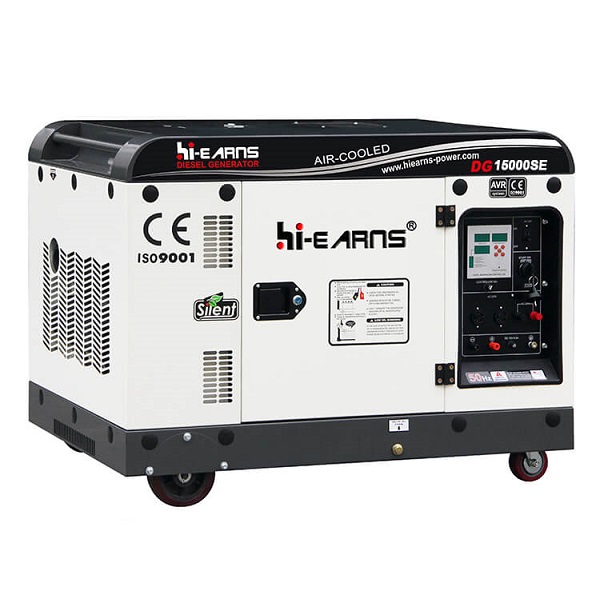
People use an air cooled diesel generator when they want simple power. These generators have fans that blow air over the engine. The moving air takes away heat from the engine. This stops the engine from getting too hot. You do not need coolant or water for this. The design makes these generators light and easy to carry. You can set up an air cooled diesel generator fast. You also do not need to check for leaks or coolant.
More people are buying air-cooled generators every year. By 2028, experts think the air cooled diesel generator market will be about $4.6 billion. This is because people need power in places with lots of outages. Many choose air-cooled generators since they work in many places and save money.
You should look at the good and bad sides before picking an air cooled diesel generator. Here is a quick list:
| Advantages of Air-Cooled Generators | Disadvantages of Air-Cooled Generators |
| Cost-effectiveness: Usually costs less because it is simple. | Limited power output: Not as strong, so it gives less power. |
| Easy to maintain: Has fewer parts and no coolant to check. | Noise during operation: Makes more noise because of the fans. |
| Compact size: Small and light, so you can move it easily. | Higher operating temperature: May get too hot in warm places. |
| Simplicity: Fewer parts mean less can go wrong. | Not well-suitable for continuous use: Gets hotter, not great for big jobs. |
| Lifetime: High heat can make parts wear out faster. |
Air-cooled generators do not cool as well as liquid-cooled ones. They can have trouble in very hot places or if you need power for a long time. But for most homes and small businesses, an air cooled diesel generator works well. You get power you can trust, easy care, and a lower price. If you do not need the best cooling or lots of power, air-cooled generators are a good choice.
A liquid-cooled generator uses a radiator and coolant. The coolant moves around the engine and takes away heat. The radiator lets this heat out into the air. This keeps the engine cool, even if you use it for a long time. Liquid-cooled generators do not just use fans. They are quieter and work better for long jobs or hot places.
Liquid-cooled generators have many good points for hard jobs:
The cooling system helps the engine work well.
These generators are quieter than air-cooled generator models.
They work well in very hot weather, where air-cooled generator units may not.
They do a good job when you need lots of power for a long time.
But there are some things to think about:
Liquid-cooled generators cost more to buy and fix.
You must check the coolant and look for leaks.
These generators are bigger and heavier, so they need more room.
| Pros of Liquid-Cooled Generators | Cons of Liquid-Cooled Generators |
| High efficiency | Higher installation cost |
| Quiet operation | More maintenance required |
| Reliable in hot climates | Larger size |
| Suitable for continuous use | Potential for coolant leaks |
Liquid-cooled generators give steady power for big jobs. If you want a generator that works well in tough places and is quiet, you should think about a liquid-cooled generator.
Air-cooled generators and liquid-cooled generators give different amounts of power. Air-cooled generators usually make between 13 and 20 kilowatts. Liquid-cooled generators can make more power, from 25 to 50 kilowatts. You can see the difference in this table:
| Generator Type | Power Output Range (kW) |
| Air-Cooled Generators | 13 to 20 |
| Liquid-Cooled Generators | 25 to 50 |
If you need a generator for big jobs or large buildings, pick one with more power. Liquid-cooled generators are good for these needs. They help run important equipment. They also have extra features like remote monitoring and better fuel control. These features help you use more power in a smart way.
Efficiency is important if you use a generator for a long time. Air-cooled generators are good for short jobs. But they lose efficiency if you use them all the time. They can get too hot, especially in warm places. This can make them shut down. Liquid-cooled generators keep a steady temperature. They give more power without getting too hot. The cooling system uses liquid to take away heat. This keeps the engine safe and working well.
Liquid-cooled generators have a radiator and coolant pump to move heat away.
The coolant goes over engine parts and takes in heat. This helps the generator last longer.
You get steady power and less damage to parts.
Liquid-cooled generators are also quieter. They meet noise rules in neighborhoods. You can use them in quiet places without bothering people. Air-cooled generators are louder because their fans run all the time. If you want a generator that is efficient and strong for long use, liquid-cooled models are the best pick.
When you shop for generators, you want to know the price. Air-cooled generators are cheaper to buy. Liquid-cooled generators cost about twice as much for the same power. This price difference helps you pick what fits your budget.
| Generator Type | Average Purchase Price Comparison |
| Air-Cooled Generators | Lower Price |
| Liquid-Cooled Generators | About double the price of air-cooled generators for the same KW output |
If you only need backup power, air-cooled models are a good choice. If you need more power or longer use, liquid-cooled generators work better but cost more. Always look at the price before you decide.
You also need to think about costs over time. Air-cooled generators have fewer parts, so repairs and upkeep cost less. Liquid-cooled generators have more parts, like coolant pumps and radiators. These can break and cost more to fix. The difference in cost is clear when you look at five years of maintenance.
| Feature | Air-Cooled Generators | Liquid-Cooled Generators |
| Purchase Cost | Less expensive to buy | More expensive to buy |
| Components | Fewer components that can break | More components that can fail |
| Reliability | More reliable | Higher failure rate due to coolant issues |
| Repair Costs | Generally cost less to repair | Repairs often take longer |
| Maintenance Complexity | Easier to maintain | More complex due to coolant system |
| Repair Time | Repairs are usually faster | Repairs often take longer |
| Overall Maintenance Costs | Least expensive to maintain | Cost more to maintain than air-cooled |
You might save money on insurance, too. Many insurance companies give lower rates if you have a generator. You could get special deals and have fewer claims from power outages. This can help you pay less for insurance over time.
You want a generator that works for many years. Air-cooled and liquid-cooled generators last for different amounts of time. Liquid-cooled models usually last much longer than air-cooled ones. The table below shows how many hours each type can run:
| Generator Type | Typical Lifespan (hours) | Extended Lifespan (hours) |
| Air-Cooled | 1,000 | N/A |
| Liquid-Cooled | 2,000 | Up to 4,000 (with lighter usage) |
Liquid-cooled generators run at 1,800 RPM. This slower speed is easier on the engine. It helps the generator last longer and work better. These generators use strong engines with good oil systems. Air-cooled generators run at 3,600 RPM. The faster speed and simple oil system can wear out parts more quickly.
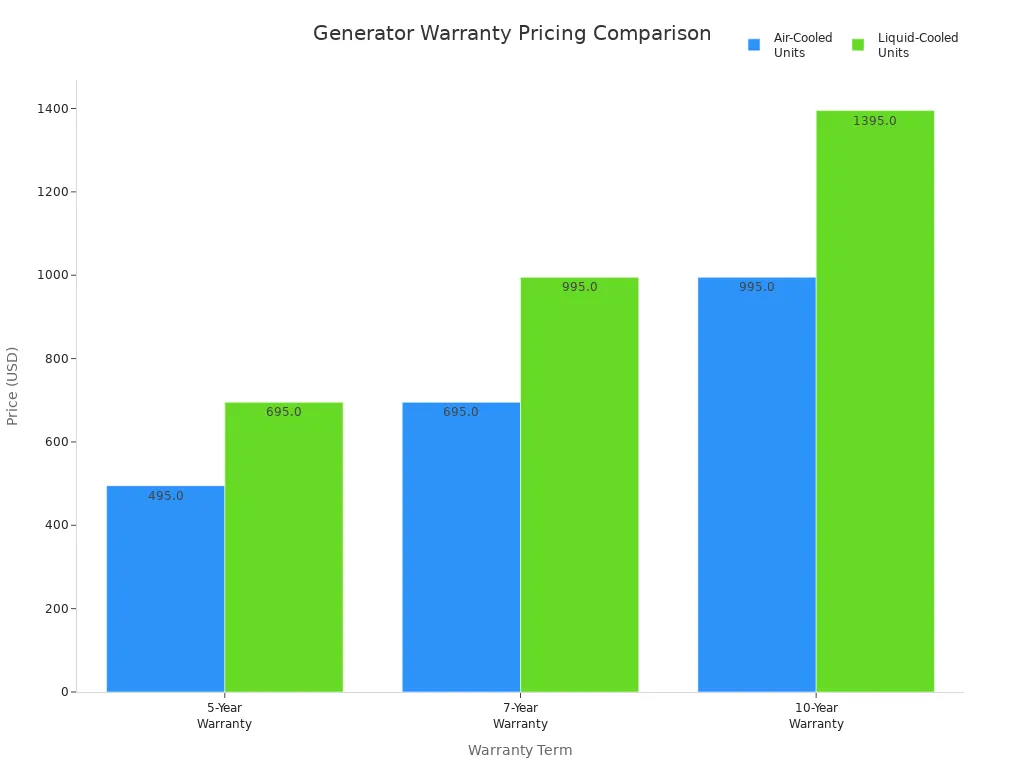
You should also think about the warranty. Longer warranties cost more money, but they help protect your generator. Here is a table that shows the usual prices for warranties:
| Generator Type | 5-Year Warranty | 7-Year Warranty | 10-Year Warranty |
| Air-Cooled Units | $495.00 | $695.00 | $995.00 |
| Liquid-Cooled Units | $695.00 | $995.00 | $1,395.00 |
Both types of generators can have problems. You should know what to look for:
Overheating can happen if there is not enough coolant or if fans break.
Cooling system problems can stop heat from leaving the engine.
If the generator gets too hot, it can be a fire risk.
Air-cooled generators can leak oil if gaskets or seals wear out.
Liquid-cooled generators can leak coolant from hoses or clamps.
Control boards can break and stop the generator from working.
Liquid-cooled generators are better for long power outages. Their engines stay cooler and last longer. Air-cooled generators can break down faster if you use them for big jobs. Always check for leaks and listen for odd sounds. Doing regular checks helps you avoid big repairs and keeps your generator ready when you need it.
Think about your local weather before picking a generator. Air-cooled generators work best when it is not too hot or cold. They can have problems in very hot or freezing places. Liquid-cooled generators do better with big temperature changes. Their cooling systems stop engines from getting too hot in summer. They also keep engines from freezing in winter. If you live where the weather is harsh, liquid-cooled models are more dependable.
Field studies show thermoelectric generators (TEGs) work well in tough climates. Researchers in the United Arab Emirates found TEGs can make power from small temperature changes, even if it is only 10 °C. This technology works in both hot and cold places. It is good for areas with strong weather. TEGs are not used much for home backup, but they show why it is important to pick a generator that fits your climate.
You need to decide where to put your generator. If you put it outside, it will face rain, dust, and wet air. These things can make your generator wear out faster. If you put it inside, it is safe from bad weather. But you must have good airflow so it does not get too hot.
The environment changes how well your generator works and how long it lasts:
Putting it in a safe place helps it last longer.
Climate control stops it from getting too hot.
High places have thin air, which makes cooling and burning fuel harder.
Very hot or cold weather can make it break.
Wet air makes it burn fuel less well.
Dust and big temperature changes make parts wear out faster.
Pick a generator and a place for it that matches your weather and area. This helps you get steady power and a generator that lasts a long time.
If you need a generator for your home or a small business, you want it to be easy and dependable. Air-cooled generators are good for most homes. You see them in houses, small offices, and cabins. They help when the power goes out and for small jobs.
Air-cooled generators make up about 60% of the single-phase home standby market.
In 2023, air-cooled models made up around 60% of global residential generator revenue.
People use air-cooled generators in:
Homes
Small businesses
Light commercial places
Vacation cabins
Think about how much power you need. Most home generators give between 5 kW and 30 kW. These can run your lights, fridge, and small devices. They are simple to set up and do not need much care. Many use natural gas or propane, which is safe and cheap.
You must be safe when using any generator. Always put it outside or in a place with lots of fresh air. Check for fire risks, carbon monoxide, and make sure it is grounded. Never hook a generator to your home’s power box without an expert.
Common needs for homes and small businesses:
Power under 50 kW
Easy to set up
Less work to keep running
Fuel choices like natural gas or propane
Big companies and factories need more power and strong machines. Liquid-cooled generators are better for these places. They work well in tough weather and with heavy use. You count on them for important jobs and long hours.
Liquid-cooled generators give strong power. They use special cooling to stop overheating. You find them in factories, hospitals, data centers, and big buildings. They help run air systems, security, and machines.
Commercial generators start at 50 kW and can go much higher. They often use diesel fuel because it lasts longer. Setting them up is hard and needs experts. You must follow safety rules and make sure there is enough air flow and space.
Main differences for big jobs:
Power over 50 kW
Harder to set up and must follow safety rules
Diesel or natural gas for lots of power
Need regular checks and care
Safety tips for all generators:
Keep fuel in a safe place to stop fires.
Make sure there is fresh air to stop carbon monoxide.
Use good wiring and grounding to stop shocks.
Watch for broken parts and leaks.
Check your generator often to keep it safe.
| Factor | Description |
| Power Output Rating | Make sure your generator gives enough power during outages. |
| Fuel Type & Overall Costs | Look at the price, fuel use, care, and safety for diesel and natural gas. |
| Autonomy | Decide if you want an automatic switch for emergencies. |
| Size | Check if you have room for it inside or outside. |
| Installation | Get experts for hard setups. |
How to pick the right generator for your needs and money:
Look at the price and cost to set it up.
Check different models for how well they work and their warranties.
Add up the costs to run it so you know what you will spend.
✅ Summary:
Pick an air-cooled generator for homes, small businesses, and light jobs. These are cheaper, easy to set up, and simple to care for. Choose a liquid-cooled generator for big companies and tough jobs. These give more power, cool better, and work well for long times. Always match your generator to your power needs, budget, and safety rules.
Pick an air-cooled generator if you want to save money. It is easy to take care of and gives enough power for small jobs. Liquid-cooled generators are better for big power needs and hot places. Look at this table to help you decide:
| Criteria | Air-Cooled | Liquid-Cooled |
| Budget | Lower | Higher |
| Power Needs | Modest | Large |
| Climate | Mild | Hot |
✅ Checklist:
Check how much money you can spend
Think about how much power you need
Look at your local weather
Remember to check how hard it is to keep working
You need to clean the air filter often. Check the oil to make sure it is full. Look at the fan to see if it works right. Doing these things helps your generator work well and last longer.
Yes, you can use a liquid-cooled generator when it is cold. Put antifreeze in the coolant. This keeps the engine safe and lets it run in freezing weather.
Liquid-cooled generators make less noise than air-cooled ones. The cooling system helps lower the sound. This means you will not be bothered by loud noise at home or work.