



Hotline 0086-519-86239986

All News
Supplier reliability rests on verifiable criteria, not sales claims. You need proof before you commit volume orders. Five factors anchor any sound evaluation: product quality, compliance, pricing transparency, delivery reliability, and after-sales support. This post gives you a practical checklist for supplier vetting and reordering.
Wholesalers commonly weigh a defined set of criteria. Engine brand signals reliability. Pump efficiency drives energy savings. Casting quality predicts durability. Test reports verify performance. Delivery capability protects project timelines. Treat each item as a question you can answer with documents, samples, or a factory audit. Apply the same checklist to every diesel water pump supplier you assess, and score the results side by side.
Check test reports and sample pumps before you order in bulk.
Confirm certifications like EPA and UL to avoid customs delays.
Compare total lifetime cost, not just the purchase price.
Ask for stock levels and lead times to meet your customers' deadlines.
Test technical support and warranty terms before you commit.
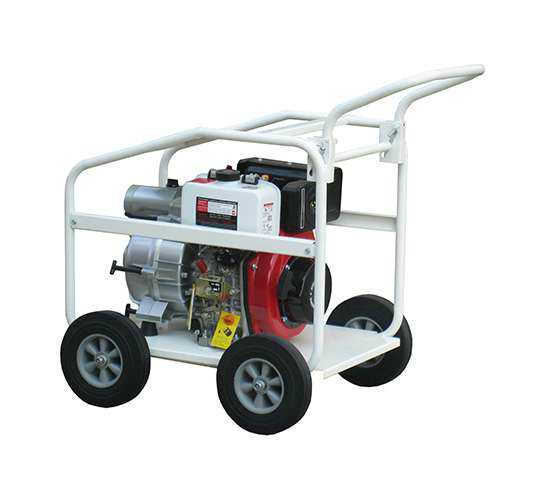
Ask every supplier for test documentation before you place a volume order. A reliable factory balances impellers dynamically and pressure-tests each casing. These checks confirm the pump will hold up in off-grid field conditions. Request sample units and run them under load yourself. Inspect the castings for porosity and check the seals for fit.
Hiearns illustrates what a complete line looks like. Its diesel water pump range covers farm irrigation, firefighting, and industrial water transfer. You can source clean water pumps, high-pressure pumps, trash pumps, and water-cooled models in sizes from 1.5 to 4 inches. That breadth lets you fill mixed orders from one account.
Material choice drives both durability and handling. Compare the two common housing options before you commit:
Property | Cast Iron Housing | Aluminum Alloy Housing |
|---|---|---|
Density / Weight | ~7.2 g/cm³ — heavy | ~2.7 g/cm³ — lightweight |
Tensile Strength | 200–450 MPa | 150–310 MPa |
Wear Resistance | Excellent | Moderate |
Best For | Long-term harsh-duty operation | Frequent movement and transport |
Cast iron high-pressure models such as the DP30DHCI and DP15HCI suit long-term operation in harsh environments. Their higher tensile strength and wear resistance pay off in continuous duty. Aluminum alloy models such as the DP30H cut weight for frequent movement in agricultural settings. The trash pump WP30V handles sewage and debris through a 3-inch port.
A reliable supplier adapts pumps to local working conditions. Sandy water calls for wear-resistant impellers. High-lift sites call for a pressure-matched design. This fit reduces after-sales trouble and protects your wholesale margins.
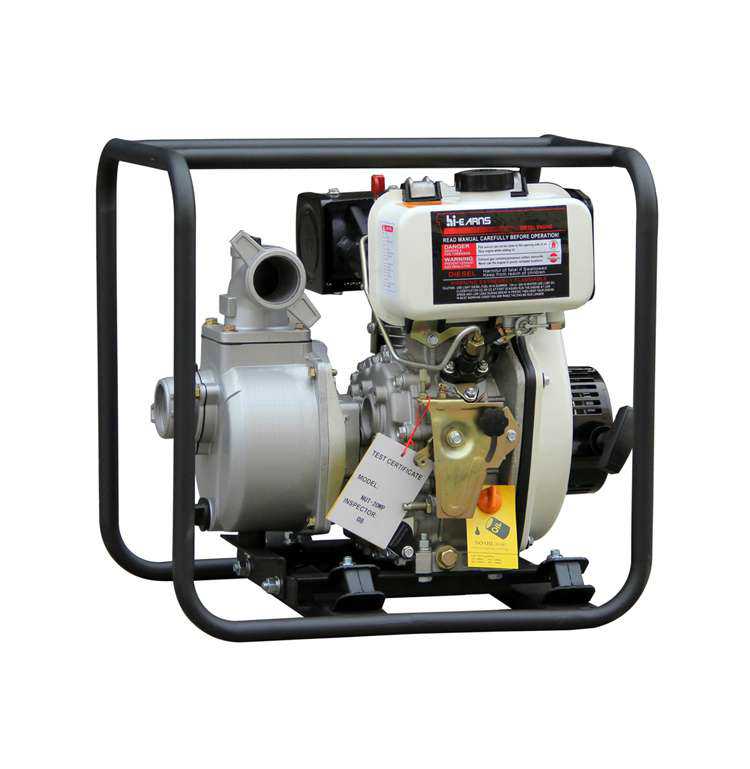
Check the certification file before you discuss price. Import rules vary by market, and a missing certificate can stop your shipment at the border. Diesel engines fall under US emissions law. Importers bringing engine-driven equipment into the United States must hold an EPA Certificate of Conformity, and compliance data runs through EPA's Verify system. Firefighting models carry their own layer of rules. UL 448 and FM 1319 approvals cover centrifugal fire pumps, and NFPA 20 requires listed pumps for a compliant installation. ISO 9001 gives you third-party proof of a consistent quality system. Other markets add their own entry requirements, such as SASO approval for Saudi Arabia and CAN/ULC standards for Canada.
Certification / Requirement | Applies To | Purpose / Market Relevance |
|---|---|---|
EPA Certificate of Conformity | Imported diesel engines into the US | Emissions compliance under the Clean Air Act |
UL 448 (UL Listing) | Centrifugal stationary fire pumps | Public safety; required for NFPA 20 compliance |
FM 1319 (FM Approval) | Centrifugal fire pumps | Property loss prevention; often mandated by insurers |
NFPA 20 | Complete fire pump installation | System standard requiring listed pumps |
UL 142 | Fuel tanks for diesel units | Construction standard for certified assemblies |
ISO 9001 | Manufacturer quality systems | Proof of consistent quality management |
SASO approval | Saudi Arabia construction products | Mandatory market entry |
CAN/ULC standards | Canada fire system components | Canadian fire system compliance |
Compare quotes on lifetime cost, not sticker price. Purchase price is often cited as only about 10% of a pump's lifetime cost. Fuel, spares, maintenance, and downtime make up the rest. Ask each supplier for spare parts pricing and typical lead times on wear items. Fuel efficiency matters most on units that run long hours. Downtime carries real weight too, since a failed diesel water pump can idle staff, delay projects, and trigger penalty clauses.
Higher-budget pumps bring advanced features and superior performance. They fit continuous duty, critical fire systems, and sites where downtime is expensive. Lower-cost options fit light seasonal work and price-sensitive resale channels. Match the tier to the end user, and your margin holds on both.
Stock availability decides whether you can serve your customers on time. Many manufacturers run long lead times for custom orders. A buyer who needs pumps for a harvest season cannot wait months for a factory build slot. You need a supplier who holds inventory and ships from stock.
Ask each supplier for current stock levels on your core models. Request a written lead time for repeat orders and for custom configurations. Hiearns supports this check with a monthly capacity of over 6,000 sets. That volume gives you consistent quality and availability across large orders. A capacity figure like this tells you the factory can absorb your growth without stretching delivery dates.
Packaging protects your margin as much as the pump itself does. A diesel water pump is heavy and ships with fuel-system components that need protection. Confirm the export packaging standard before you order. Ask how the supplier secures the frame, the engine, and the control panel for ocean freight.
Logistics planning deserves the same attention. Request the supplier's typical port of loading, shipping terms, and documentation package. Verify that the supplier handles crating for mixed container loads. A supplier who manages packaging and freight well reduces damage claims and keeps your resale schedule intact. Test one shipment first, then scale your order volume once the packaging proves reliable.
Read the warranty terms line by line before you sign. A strong policy states the coverage period, the parts included, and the labor arrangement in plain language. Ask what voids the warranty. Common exclusions include unauthorized repairs, wrong fuel, and operation outside rated conditions. Confirm who pays return freight on a claim. A supplier who answers these questions in writing protects your resale reputation.
Spare parts availability matters as much as the warranty itself. A pump under warranty still costs you a customer if it sits idle for weeks. Ask for the supplier's parts list and the typical restock time on wear items such as seals, impellers, and filters. Request a starter spares kit with your first order. Stocking common parts locally lets you resolve minor failures fast and keeps your buyers loyal.
Test technical support before you commit to volume. Send a technical question during the vetting stage and track the response time. A reliable supplier answers within a defined window and gives a specific answer, not a vague promise. Ask whether support covers installation, troubleshooting, and engine service. Confirm the channels available to you, such as email, phone, or messaging apps, and the languages your team can use.
Escalation paths deserve a place on your checklist too. Ask who handles a field failure that your own team cannot solve. A supplier with clear escalation steps and trained engineers resolves issues before they reach your customer. Document each support interaction during the trial period. That record tells you whether the diesel water pump supplier will stand behind the product after the invoice clears.
Test responsiveness during the vetting stage, not after the first order. Send a quote request with two or three technical questions and note the reply time. A reliable supplier answers within a stated window and assigns you a named account manager. That person should know your core models, your market, and your typical order size. Ask how the supplier handles urgent requests outside normal hours. A clear answer here signals a team that treats wholesalers as partners.
A trusted supplier also offers a broad product range. Look for submersible, solar, surface, and petrol and diesel pumps under one account. Each type fits a different job. Submersible models suit deep wells, solar units fit remote sites without grid power, and surface pumps serve shallow lifts. Petrol and diesel water pump options cover portable field work. This breadth gives you flexibility to meet diverse customer needs without opening new supplier accounts.
Check the supplier's financial footing before you commit to a long-term contract. Ask for bank references and years in operation. Request a list of current wholesale accounts in your region and contact two of them. Ask those buyers about delivery consistency and how the supplier handled a problem order. A steady track record across several years tells you more than any brochure.
Review the supplier's history of order accuracy and claim resolution. A factory with stable finances keeps production running through demand swings. That stability protects your resale schedule. Score communication and reputation alongside quality, compliance, pricing, delivery, and support. The full picture guides your final decision.
Treat these six areas as one connected framework. Quality and compliance set the floor. Pricing and delivery decide your margin. Support and reputation protect your customer base. A weakness in any single link undermines the rest.
Score every candidate against the full checklist before you commit to volume orders or a long-term contract. Compare the totals side by side, and revisit the scores at each reorder. This discipline keeps weak links visible.
A holistic evaluation protects three things at once: your margins, your resale reputation, and your customers' trust. Choose a diesel water pump supplier who earns high marks across the whole framework, not just on price.
Ask for current stock levels on your core models in writing. Request a stated lead time for repeat orders. A factory with high monthly output, such as Hiearns at over 6,000 sets, can absorb your growth without stretching delivery dates. Test one shipment before you scale volume.
Yes. Run sample units under load yourself. Inspect castings for porosity and check seal fit. Request dynamic balancing and pressure-test records for each casing. This step confirms the pump will hold up in off-grid field conditions and protects your resale reputation.
Start with wear items: seals, impellers, and filters. Ask for the supplier's parts list and typical restock time. Request a starter spares kit with your first order. Local stock lets you resolve minor failures fast and keeps buyers loyal when a pump sits idle.
Compare lifetime cost, not sticker price. Purchase price is often cited as only about 10% of a pump's lifetime cost. Ask for spare parts pricing, fuel efficiency data, and lead times on wear items. Match each pump tier to the end user so your margin holds.