


Hotline 0086-519-86239986

All News
You can reduce the comparison to four evaluation areas: technical performance, application fit, regulatory compliance, and total cost of ownership. Water-cooled units deserve this scrutiny. They often run continuous duty, their cooling system quality shapes long-term reliability, and downtime carries real cost. So you need more than a brochure. This guide gives you specific criteria and direct questions to put to every water cooled diesel generator manufacturer. Ask the same questions, demand the same documents, and you get an apples-to-apples comparison instead of a sales pitch.
Compare manufacturers on four key areas: technical performance, application fit, compliance, and total cost.
Verify engine model numbers and request factory load test reports for the specific unit.
Match the generator's power rating and configuration to your actual site conditions and load needs.
Calculate total cost of ownership by adding fuel and maintenance costs to the purchase price.
Ask for written warranties and after-sales support details before you buy.
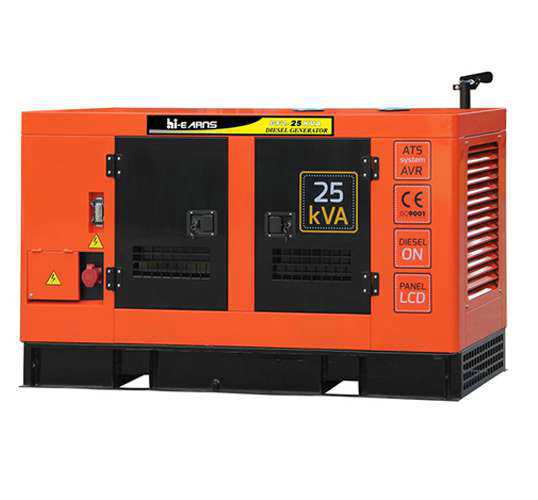
The engine is the heart of the set, so start your comparison here. Manufacturers commonly offer Cummins, Perkins, Volvo, Deutz, Isuzu, Weichai, SDEC, Baudouin, Yuchai, Mitsubishi, and Ricardo engines. Each brand has a natural home. Cummins suits manufacturing, construction, healthcare, data centers, events, remote sites, mining, and oil rigs on standby duty. Perkins, Weichai, Isuzu, Deutz, SDEC, and Volvo serve similar industrial and commercial standby applications. Ask each water cooled diesel generator manufacturer which brands it stocks and why that brand fits your load profile.
Engine Brand | Typical Application |
|---|---|
Cummins | Manufacturing, construction, healthcare, data centers, events/remote sites, mining, oil rigs (standby power) |
Perkins | Industrial and commercial standby applications |
Weichai | Industrial and commercial standby applications |
Isuzu | Industrial and commercial standby applications |
Deutz | Industrial and commercial standby applications |
SDEC | Industrial and commercial standby applications |
Volvo | Industrial and commercial standby applications |
A brand name on a quote proves little on its own. Verify the engine model number against the OEM catalog. Follow this sequence:
Find the Engine Serial Number on the data plate. On Cummins ISX units it sits on the rocker lever cover; on QSB units it sits at the rear of the block. Legacy serial numbers are 8-digit numeric codes.
Enter the serial number into the official Cummins QuickServe online parts lookup portal. The portal returns exact part data and technical service bulletins.
Cross-check the returned specifications, such as CPL codes, against the physical engine.
Watch for red flags. A printed sticker instead of an etched metal plate, blurry text, or overspray on wiring harnesses all suggest a third-party rebuild. Rough sanding marks around stamped numbers hint at re-stamping.
Alternators and cooling design matter just as much. Compare brushless alternators for stable output and low maintenance. Hiearns pairs Quanchai and Cummins engines with brushless alternators. Ask how each manufacturer sizes the radiator and fan for your ambient conditions.
The control panel is your daily interface, so compare it feature by feature. Look for digital monitoring that shows voltage, current, frequency, and running hours at a glance. Confirm the panel displays load as a percentage of rated capacity; this tells you how much headroom you have. Protection features deserve equal weight. Ask whether the panel shuts the set down on low oil pressure, high coolant temperature, over-speed, and overload. A panel that only alarms without shutting down leaves your equipment exposed. Request a demonstration or a video walkthrough of the panel before you commit.
Power rating definitions change the answer you get. The same engine-alternator combination can carry different ratings depending on the power definition applied. A 100 kW prime-rated set and a 110 kW standby-rated set often use identical hardware. Require every manufacturer to state which rating it applies to your quote.
Attribute | Standby (ESP) | Prime (PRP) |
|---|---|---|
Purpose | Backup power during utility outage | Continuous power in variable load applications |
Annual hours | Max 200 hours/year (incl. 25 hours at full power) | Unlimited (up to 8,760 hours/year) |
Average load factor | ≤70% of ESP over 24 hours | ≤70% of PRP over 24 hours |
Overload capability | Normally none specified (brief motor-starting spike only) | Up to 10% for 1 hour within every 12 hours |
Typical applications | Hospitals, data centers, commercial buildings, emergency services | Manufacturing plants, mining, off-grid facilities, continuous production |
Prime rating per ISO 8528-3 permits a 10% overload for 1 hour within any 12-hour period. Standby rating permits no overload under any circumstances. Verify the specific rating definition in manufacturer documentation before applying load.
Water-cooled sets typically range from about 10 kW to 1000 kW. Hiearns offers 10KVA to 300KW in open frame and silent configurations, with single/three-phase output at 50/60Hz and 1500/1800rpm.
Altitude and ambient temperature reshape real output. Air pressure and density fall roughly 3% per 1,000 ft, so each intake cycle carries less oxygen. Combustion weakens, output drops, and fuel use and exhaust smoke rise. Hot air acts similarly and adds heat load to the radiator, coolant, and fans. Most generators are rated at 77°F (25°C) ambient, and derating factors apply above that point. Consult manufacturer performance curves rather than generic assumptions.
Noise-sensitive sites call for silent models. Hospitals, schools, supermarkets, and military zones fit this category well. Confirm fuel configuration when you order, including hot-swap fuel capability where continuous runtime matters.
Ask every water cooled diesel generator manufacturer for its quality and emissions paperwork before you discuss price. ISO 9001 certification shows a manufacturer runs a documented quality management system. Hiearns holds ISO9001-2015 QMS certification and CE approval from the European Union. ISO 8528 defines generator set ratings, performance, and acceptance tests, including vibration and sound measurement. ISO 3046 covers engine power ratings, fuel consumption, and vibration. Request the certificate numbers and confirm they cover the model you plan to buy.
ISO Standard | Scope |
|---|---|
ISO 8528 | Generator set ratings, performance, and acceptance tests |
ISO 3046 | Engine power ratings, fuel consumption, and vibration |
ISO 9001 | Quality management system requirements |
Emissions compliance depends on your market. Units supplied for the European market are described as ISO 8528 tested and 100% load tested before shipment, in addition to being CE marked and compliant with Regulation (EU) 2016/1628 Stage V. Some water-cooled sets carry dual certification for EPA Tier 4 Final and EU Stage 5, with SCR, DPF, and DOC aftertreatment. Confirm which regulation applies to your jurisdiction and ask for the certificate that names your exact model.
A CE mark alone does not prove your set performs. Request the factory load test report for the specific unit. The report should record run duration, load applied in kW, voltage output, frequency, exhaust temperature, and transfer switch operation time. Check that the run lasted at least 30 minutes at 30% of nameplate kW rating or higher. Frequency should sit at 60 Hz plus or minus 0.5 Hz, and voltage should stay within 5% of rated output.
Build a documentation checklist and send it to each supplier. Ask for the operation and maintenance manual, wiring diagrams, test certificates, and the inspection record. That record should list the inspection date, inspector name, equipment identification, readings taken, deficiencies found, and corrective actions completed. Keep duplicate copies on site, because inspectors may request them at any time.
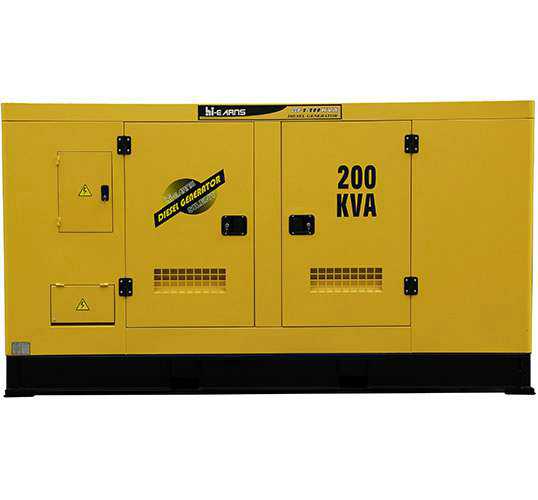
Purchase price is only the first number on the ledger. A water cooled diesel generator manufacturer that quotes the lowest price may cost you more over a decade of service. Compare the purchase price against fuel efficiency and maintenance costs before you sign. Diesel generators generally offer fuel efficiency and lower capital cost than other fuel types, which makes them a strong fit for continuous duty.
Fuel is your largest recurring expense. Diesel typically runs $3.50–$4.50 per gallon, while natural gas runs $8–$15 per thousand cubic feet. Diesel thermal efficiency sits at roughly 35–40%, compared with 25–30% for natural gas. Natural gas can carry a lower fuel cost per kilowatt-hour over thousands of runtime hours, and it avoids fuel polishing and tank maintenance. Natural gas also demands a higher upfront purchase and installation cost. Propane suits remote sites and smaller installations, but storage logistics and cost typically push industrial buyers toward diesel or pipeline natural gas. Weigh these trade-offs against your actual runtime profile.
Many Hiearns models feature low fuel consumption and full bottom fuel tanks for extended runtime. Ask each supplier for fuel consumption at 50%, 75%, and 100% load. Multiply those figures by your expected annual hours and your local fuel price. That calculation turns a vague claim into a comparable number.
Maintenance follows a predictable rhythm. Change oil and the oil filter at the first 25–50 hours after a new install. Prime and continuous duty units need oil and filter changes every 100–250 hours. Standby units with frequent runtime need oil, oil filter, fuel filter, and air filter service every 500 hours. Valve adjustment, injector service, and a full coolant flush fall at 1,000–2,000 hours. Heavy-duty industrial engines need top-end inspection at 6,000–12,000 hours and major overhaul at 15,000–30,000 hours. Annual tasks include a full load bank test of about two hours at 100% for NFPA 110 compliance, fuel polishing, and calibration of safety shutdowns. Water-cooled units add coolant checks when the engine is cool, hose and clamp inspection, and radiator cleaning. Request the model-specific service schedule in writing.
Warranty terms vary widely across the market. Compare duration, coverage, and exclusions side by side.
Manufacturer | Warranty Duration | Coverage Highlights |
|---|---|---|
VETUS | 36 months or 2,000 hours (1500 RPM); 36 months or 1,500 hours (3000 RPM) | Parts and labor; major engine components get extra 24 months/1,000 hours under VETUS 5 PLUS |
Westerbeke | 5-year limited | Parts and accessories may carry different periods |
Northern Lights | 1 + 4 years (12 months unlimited hours + 48 months/2,500 hours) | First year parts and labor; later years limited to specified major components |
Fischer Panda | 5-year limited | Years 1–2 parts, labor, mileage; Year 3 parts; Years 4–5 50% parts |
Cummins Onan | Some families 5-year/2,000 hours | Not universal across all models |
Warranties generally cover defects in materials or workmanship. Remedies include repair or replacement. Coverage of parts, labor, technician travel, freight, and reinstallation varies substantially. Warranties typically exclude normal wear, improper use, incorrect installation, neglected maintenance, and consumable service items. Duration may be expressed in years or operating hours, whichever occurs first.
After-sales support separates a reliable supplier from a transactional one. Look for 24/7 technical support with a guaranteed response window, preventive maintenance programs, and genuine spare parts availability. Hiearns uses a strict spare parts IQC system to guarantee component quality and provides technical support at every step. Confirm shipping arrangements and lead times for service kits, controllers, AVRs, and engine overhaul components. Ask how the manufacturer handles warranty claims and whether it stocks parts locally. A strong water cooled diesel generator manufacturer backs its set with documentation, parts, and people you can reach.
Weigh all four areas together: technical performance, application fit, regulatory compliance, and total cost of ownership. A balanced score across every area beats a low price on one. Build a comparison checklist. Then request written documentation from each water cooled diesel generator manufacturer, including spec sheets, load test reports, and warranty terms. Written proof lets you verify claims and spot gaps before money changes hands.
Your final step is simple. Draft one specification sheet and send it to every supplier. Ask each one to quote against that same sheet. Now every offer covers identical requirements, and you can compare them on equal terms.
Start with the engine model number and the alternator type. Verify the engine model against the OEM catalog to confirm it is genuine. Then compare brushless alternator design, radiator sizing, and control panel protection features. These four points reveal more about real performance than a brand name on a quote.
Ask each supplier to state plainly whether the figure is a standby rating or a prime rating. Prime rating per ISO 8528-3 allows a 10% overload for 1 hour within any 12-hour period. Standby rating allows no overload. Compare quotes only after every manufacturer applies the same rating definition.
Request the spec sheet, the factory load test report for the specific unit, the operation and maintenance manual, wiring diagrams, and written warranty terms. Confirm ISO 9001 certification and CE approval cover your exact model. Written proof lets you verify claims and spot gaps before you pay.
Ask for fuel consumption at 50%, 75%, and 100% load. Multiply those figures by your expected annual hours and your local fuel price. Then add the model-specific service schedule and warranty coverage. Purchase price alone tells you little about a decade of service.
Yes. Hiearns offers 10KVA to 300KW in both open frame and silent configurations, with single or three-phase output at 50/60Hz and 1500/1800rpm. Silent models suit hospitals, schools, supermarkets, and military zones. Confirm your fuel configuration, including hot-swap capability, when you order.