




Hotline 0086-519-86239986

All News
Equipment failure costs you time, money, and customer trust. A dependable diesel engine manufacturer prevents those losses through proven engineering, strict quality control, and responsive support. You need a partner who protects your uptime.
This guide gives you a practical four-step framework for evaluating manufacturers. You will examine technical design, production quality, regulatory compliance, and after-sales service. Each step helps you separate reliable partners from mere suppliers.
Business owners and procurement managers face high-stakes decisions. Your choice affects daily operations and long-term profitability. Use this framework to make an informed selection.
The right manufacturer delivers engines that start reliably, run efficiently, and last for years. You deserve that confidence.
Check the manufacturer's engineering depth by asking for torque curves and fuel consumption maps.
Visit the factory or request a virtual tour to see automated assembly lines and quality control checkpoints.
Confirm the manufacturer holds EPA, CE, or other certifications for your target market.
Test the manufacturer's aftermarket support by asking about parts availability and warranty terms before you buy.
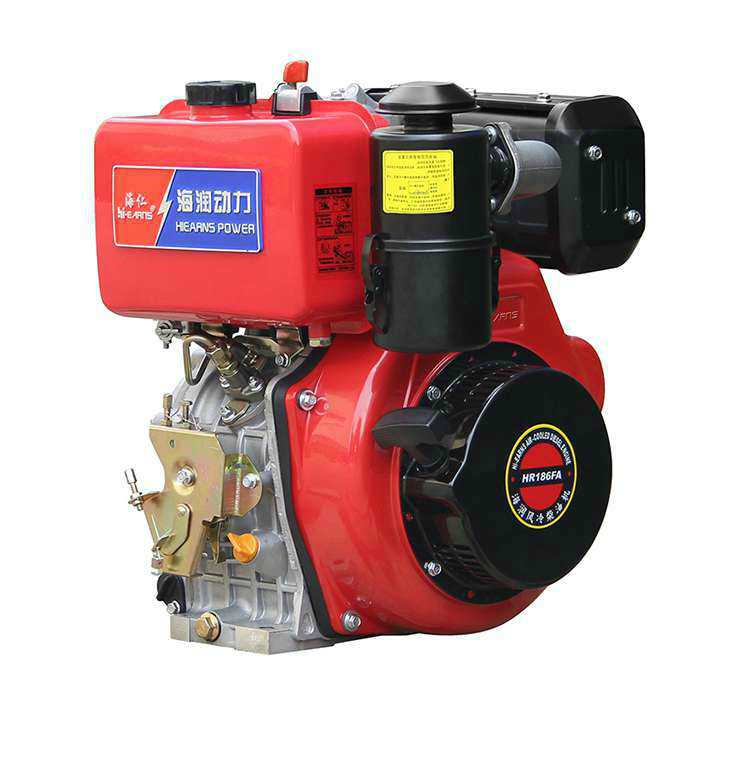
Engineering depth separates a reliable diesel engine manufacturer from an assembly shop. The design choices you make today determine how long your engine runs, how much fuel it burns, and how often it needs repairs. A manufacturer with strong R&D capabilities delivers engines that match your specific application.
R&D investment shows a manufacturer's commitment to innovation. Companies that invest heavily in research produce better designs, more durable parts, and more efficient systems. Industry data reveals a clear trend:
A key indicator of strength in advanced industries is the amount firms invest in R&D to produce new innovations. The ITIF report, using the EU R&D Industrial Scoreboard, tracks private R&D investments. Notably, when adjusting for R&D workers' wages, Chinese firms' share of advanced sector R&D investments grew from 4% in 2014 to 13% in 2024 (or 9% to 25% on a wage-adjusted basis), while their location quotient (R&D concentration) rose from 0.7 to 1.5. This demonstrates that R&D investment levels and their growth trajectory are measurable indicators of a manufacturer's innovation track record.
You can verify a manufacturer's engineering depth through several indicators:
Application engineering support: Tailored engine matching to the machine's duty cycle, not a one-size-fits-all solution.
Torque backup: Sufficient low-end torque to prevent stalling during heavy breakout maneuvers.
Technical transparency: Willingness to provide detailed torque curves and fuel consumption maps. Absence suggests weak R&D capability.
A manufacturer with sustained R&D commitment demonstrates investment in innovation. This infrastructure supports continuous improvement in engine architecture. You should ask for torque curves and fuel maps before making a decision. A supplier who shares these documents shows confidence in their engineering.
Fuel efficiency directly affects your operating costs. Engine design choices like combustion chamber shape, piston ring sealing, and air intake systems determine how much fuel you burn per hour. A well-designed engine saves you money over its lifetime.
Air filtration is critical for engine longevity. Dust and debris enter the combustion chamber through the intake system. Poor filtration causes rapid wear on piston rings, cylinder walls, and valves. Advanced systems prevent this damage.
Diesel engines from a reliable manufacturer often feature high-efficiency air filtration systems that minimize particle ingress. The result is longer engine life and fewer oil changes.
Consider the range of options available, from compact models suitable for small generators and water pumps to larger models for construction machinery and agricultural tools. Each model benefits from the same advanced filtration and fuel-saving design.
You should ask the manufacturer for fuel consumption curves at different load levels. An honest supplier provides this data. Compare the fuel consumption per horsepower-hour across models. A difference of just a few grams per hour adds up to significant savings over thousands of operating hours.
The right design choices protect your investment. Look for a reliable diesel engine manufacturer who invests in R&D, shares technical data, and builds engines with proven filtration and fuel systems. That manufacturer will keep your equipment running reliably.
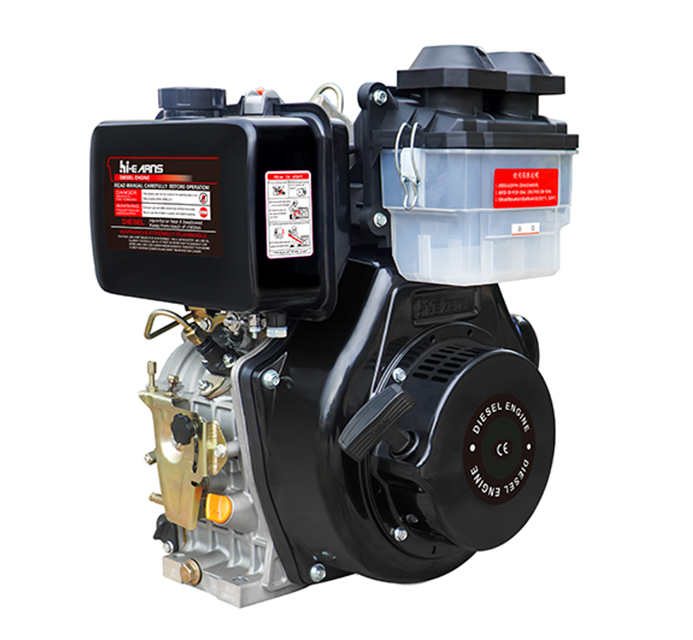
Engineering drawings tell you what a manufacturer can build. Factory floors reveal what they actually produce. You must verify that the quality promised on paper matches the reality of production. A reliable diesel engine manufacturer welcomes scrutiny because they have nothing to hide.
You should visit the facility or request a virtual tour. Look for automated assembly lines that reduce human error. Check the factory size and organization. A manufacturer with a large facility and modern assembly lines signals serious investment in production capability.
Walk the floor with specific questions in mind. Ask how workers handle incoming raw materials. Request to see batch records that track each engine's components. Examine how the manufacturer stores parts and manages inventory. A disorganized warehouse often indicates weak quality control.
International certifications serve as your baseline for evaluation. Look for these credentials:
ISO 9001:2015 for documented production controls, batch records, and inspection procedures
ISO 14001:2015 for environmental governance covering emissions, effluent, and waste management
ISO 45001:2018 for occupational health and safety management in manufacturing environments
CE certification for export to the European Union
EPA certification for export to the United States
These certifications prove the manufacturer follows documented processes. They do not guarantee perfection, but they establish a minimum standard. A manufacturer without these credentials should raise immediate red flags.
You cannot inspect quality into a product. You must build it in from the start. Certifications verify that the manufacturer has the systems in place to do so.
Ask about their quality control checkpoints. How many inspection points exist along the assembly line? What happens when a part fails inspection? Do they quarantine defective units or let them continue down the line? The answers reveal their commitment to quality.
Every engine should undergo testing before it leaves the factory. You need to know what tests they run and how long they run them. A manufacturer who skips testing to save time will cost you money later.
Request details about their test procedures. Do they run each engine under load? Do they measure actual horsepower output against the rated specification? Do they check fuel consumption at various RPM levels? These tests verify that the engine meets its stated claims.
Validation cycles matter just as much as individual tests. A manufacturer should run engines for extended periods to identify weak points. They should test under extreme temperatures, dusty conditions, and heavy loads. These simulations reveal design flaws before you encounter them in the field.
A reliable manufacturer subjects every engine to rigorous quality control checks. Each unit must pass performance verification before packaging. This process ensures each engine delivers its rated power. You should demand the same verification from any manufacturer you consider.
Ask for test reports from recent production batches. A transparent manufacturer shares this data willingly. They understand that your trust depends on their proof. If they hesitate or provide vague answers, treat that as a warning sign.
The testing philosophy matters as much as the test equipment. Some manufacturers test only a sample from each batch. Others test every single unit. The latter approach costs more but delivers greater reliability. Your application determines which standard you require. For critical equipment, insist on 100% testing.
A reliable diesel engine manufacturer treats testing as an investment, not an expense. They know that one defective engine damages their reputation. They also know that your business depends on their quality. Choose a partner who proves their quality through transparent testing and validation.
Emission rules are not optional. They determine where you can legally sell and operate your equipment. A diesel engine manufacturer with global experience simplifies your compliance burden. You avoid the headache of navigating different regulations across multiple countries.
You must verify that your chosen manufacturer holds the right certifications. Look for EPA approval for the United States and CE marking for the European Union. These credentials prove the engines meet strict environmental standards. A manufacturer with global experience already navigates these complex requirements daily.
The transition from Tier 3 to Tier 4 standards shows how regulations evolve. Tier 3 relied on internal engine improvements like advanced fuel injection and optimized combustion. Tier 4 demands advanced exhaust aftertreatment systems. The table below shows the key differences:
Aspect | Tier 3 | Tier 4 |
|---|---|---|
Technology | Internal engine improvements | Advanced exhaust aftertreatment (DPF, SCR) |
Emissions Reduction | Moderate reduction in NOx and PM | Up to 90% reduction in NOx and PM |
Key Components | Possible EGR, no mandated aftertreatment | DPF, SCR, DEF injection, electronic controls |
Pros | Simpler, lower cost, less maintenance | Greater fuel efficiency, lower emissions, quieter |
Cons | Higher emissions, less efficient | Higher upfront cost, added complexity, maintenance |
You must decide which tier fits your market. Tier 3 engines cost less upfront. Tier 4 engines meet stricter rules and offer better fuel economy. Your target market determines the right choice.
Aftertreatment systems add complexity to your equipment. You need to understand how they affect engine size, cost, and maintenance. Common technologies include Exhaust Gas Recirculation (EGR), Diesel Oxidation Catalyst (DOC), Diesel Particulate Filter (DPF), and Selective Catalytic Reduction (SCR).
Active DPFs with SCR systems achieve Tier 4's required PM and NOx reductions. However, these systems bring trade-offs. A poorly managed DPF can increase fuel consumption by 5-15% through frequent active regenerations. For a fleet burning 50,000 gallons annually, that represents $7,500-$22,500 in extra fuel costs.
A comprehensive aftertreatment maintenance program typically costs less than $2,000 per truck per year, while a single major aftertreatment failure can easily exceed $5,000 when factoring in parts, labor, downtime, and consequential damages. The math is simple: proactive maintenance pays for itself many times over.
Ask your diesel engine manufacturer about their aftertreatment integration experience. Do they offer engines with packaged emissions technology that avoids extensive DEF infrastructure? Compact equipment manufacturers found ways to package new emissions technology without requiring the extensive diesel exhaust fluid infrastructure common with larger Tier 4 equipment. You want a partner who solves these challenges before you face them.
A reliable diesel engine manufacturer proves its value after the sale. The best engineering and strictest quality control mean nothing if you cannot get parts quickly or receive help when problems arise. You need a partner who stands behind their product long after the invoice clears.
Parts availability determines your equipment uptime. A broken engine that waits weeks for a replacement part costs you money every single day. You must ask about lead times before you commit to a purchase.
Strong distribution networks share several key characteristics:
Comprehensive product availability paired with technical support and quality assurance programs
Strategic investments in distribution center expansion, digital catalog platforms, and technical training
E-commerce partnerships that enable rapid delivery to end customers
Quality assurance partnerships with certified suppliers
Collaboration between international suppliers and domestic distributors
Integration of online ordering with rapid delivery capabilities
A manufacturer with global experience maintains the infrastructure to ship parts wherever you operate. Their global reach means you can find replacements without shipping delays across borders. Ask about their distribution centers and which regions they stock parts for your specific engine model.
Service manuals matter just as much as physical parts. You need clear documentation to perform routine maintenance and troubleshoot issues. A manufacturer who provides detailed manuals shows they want you to succeed with their product.
Warranty terms reveal a manufacturer's confidence in their product. A short warranty with vague coverage signals weak quality. A comprehensive warranty demonstrates they expect their engines to last.
Industry standards vary across manufacturers. The table below shows typical warranty structures:
Manufacturer | Warranty Duration | Coverage Details |
|---|---|---|
John Deere | 2 years or 2,000 hours (engine); 1 year or 2,000 hours (drivetrain) | Defects in materials and workmanship; standard and extended options available |
Kubota | 3 years or 3,000 hours | Defects in materials and workmanship during normal operation; requires registration at time of sale |
Volvo Penta | Off-road: 2 years or 3,000 hours (unlimited hours in year 1); Prime power: 2 years or 3,000 hours; Standby power: 2 years or 1,000 hours | Comprehensive manufacturer warranty for reliability |
CK Power Products | 2 years or 1,000 operating hours | Covers defects in material and workmanship; excludes misuse, negligence, accidents, improper installation, third-party repairs, or normal wear and tear |
Warranty terms vary by manufacturer. A typical warranty protects you against manufacturing defects, often covering the first year of operation. You should always read the fine print to understand what the warranty excludes.
Test the manufacturer's responsiveness before you buy. Send a pre-sales question and measure how quickly they reply. A slow response to a potential customer signals even slower service after the purchase. A reliable diesel engine manufacturer treats every inquiry as a priority because they value long-term relationships.
You now have a four-part framework for evaluating any diesel engine manufacturer. Assess their engineering depth, verify their production quality, confirm their emission compliance, and test their aftermarket support. Each area protects your uptime in a different way.
Your goal is a strategic partner, not a vendor. A partner anticipates your needs and keeps your equipment running for years.
Create a weighted scorecard before you compare options. Assign higher scores to factors that matter most to your business, whether that means uptime, initial cost, or fuel efficiency. Then request detailed documentation or schedule a facility tour.
The right diesel engine manufacturer is an investment in your business's resilience and growth.
A warranty covers defects in materials and workmanship, including parts and labor for repairs. Read the fine print carefully. Most warranties exclude damage from misuse, improper installation, or normal wear. Ask about specific exclusions before you sign.
Request test reports from recent production batches. Ask for torque curves and fuel consumption maps. Check for ISO9001 and CE certifications. Contact existing customers in your industry. A transparent manufacturer shares this documentation willingly. Hesitation or vague answers signal weak quality control.
Dust and debris entering the combustion chamber cause rapid wear on piston rings, cylinder walls, and valves. Advanced filtration prevents this damage. Advanced air filtration systems achieve high efficiency, minimizing particle ingress. The result is longer engine life and fewer oil changes.
Match the engine power to your equipment's duty cycle. A small engine suits small agricultural tools, while a larger model handles construction machinery. Consider your typical load and operating conditions. Ask the manufacturer for application engineering support to find the right fit.