



Hotline 0086-519-86239986
All News
Selecting the right diesel generator protects your facility from unexpected power disruptions. You must evaluate five critical pillars before purchasing: power load sizing, phase alignment, enclosure selection, regulatory compliance, and total cost of ownership. Thorough planning prevents severe operational downtime, engine wet stacking, and expensive regulatory fines. Power outages cost industrial operations an average of $37,818 per hour. Mastering these technical evaluation criteria secures your continuous operations and optimizes long-term equipment performance.
Calculate your peak power loads carefully to prevent sudden facility outages.
Add a thirty percent expansion buffer to manage heavy motor startups easily.
Choose sound-proof enclosures to follow local noise laws and protect equipment.
Perform annual load bank testing to keep the engine clean and efficient.
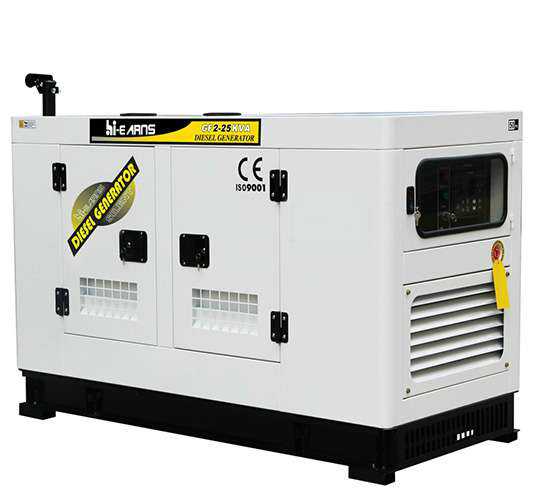
Your facility needs precise power sizing to maintain continuous operations. Standard systems range from compact 10KVA units up to powerful 300KW configurations. You must evaluate your runtime needs before selecting a diesel generator model.
You must identify your operational power demand categories accurately. The table below outlines standard rating types for commercial facilities:
Rating Type | Core Definition | Operating Limits | Load & Overload Characteristics |
|---|---|---|---|
Continuous Power | Nonstop generation at a constant load for base-load utility replacement | Unlimited hours per year | Requires a 100% steady load with no overload capacity allowed |
Prime Power | Supply power at variable loads for areas with absent or unreliable grid access | Unlimited hours per year | Handles fluctuating loads with a permissible 10% overload capability |
Standby Power | Temporary emergency backup supply during public utility power interruptions | Restricted runtime (often under 200 hours annually) | Serves variable loads during emergency outages with zero overload capacity |
Calculate your real power and apparent power demands using this key formula:
Apparent Power (kVA) = $\frac{text{Real Power (kW)}}{text{Power Factor}}$
Hiearns liquid-cooling technology manages thermal heat buildup during long-duration runs. Advanced water-cooled engines protect vital generator components from overheating under high loads.
You must match your unit's electrical setup to your building grid. Standard commercial applications require three-phase power at 50Hz or 60Hz frequencies depending on your regional utility standards.
50Hz Setup: Common for European and Asian industrial equipment standards.
60Hz Setup: Standard across North American commercial power systems.
Motor startups create initial inrush currents six to ten times higher than standard running currents. Sizing your generator strictly on continuous running power causes voltage drops and safety shutdowns.
Add a 20% to 30% capacity growth buffer above your current total electrical demand. This margin absorbs starting power spikes and allows future facility expansion.
You must select the right enclosure to protect your power investment and ensure smooth facility operations. Enclosure design impacts noise levels, physical protection, and maintenance access.
Dedicated indoor mechanical rooms provide ideal conditions for open-skid equipment. These unhoused units offer two primary operational advantages:
Enhanced Maintenance Access: Technicians service internal components without removing outer housing panels.
Reduced Spatial Footprint: Compact frames optimize room space in tight facility layouts.
Outdoors, weather-protective canopies shield your equipment from harsh climates. The table below highlights key differences across housing configurations:
Feature / Metric | Open-Skid Unit | Weather-Protective / Silent Canopy |
|---|---|---|
Upfront Cost Range | $8,700 – $34,000 | $16,000 – $87,000 |
Noise Level at 1 Meter | 100 – 110 dBA | 72 – 76 dBA |
Primary Deployment | Ventilated mechanical rooms | Outdoor pads and field locations |
Facilities near hospitals, schools, and commercial centers must enforce strict sound mitigation limits. Standard equipment generates heavy mechanical noise during operation. Super-silent enclosures suppress operational sound down to 55–60 dB at a 7-meter distance.
Hiearns designs specialized Silent and Super Silent sound-attenuating housings. These insulated enclosures absorb acoustic vibration, ensuring compliance with strict municipal noise ordinances.
Outdoor installations require durable housing materials to prevent premature structural decay. Coastal humidity and salt air rapidly corrode untreated steel frames.
Tip: Choose aluminum or specialized powder-coated finishes for sites within 50 miles of ocean waters. Aluminum naturally forms a protective oxide layer that repels ambient moisture and salt spray.
You can select stainless steel or galvanized frames with anti-corrosion external coatings. High-quality surface treatments protect structural integrity, lower maintenance costs, and extend overall equipment lifespan.
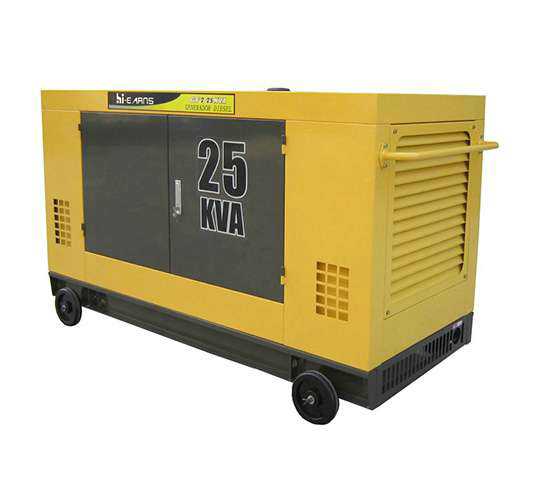
Proper installation ensures long-term operational safety and keeps your facility fully compliant with environmental laws. You must plan your site layout carefully before installing your new diesel generator.
Environmental agencies enforce strict standards on diesel engine exhaust emissions. Federal EPA guidelines allow standby emergency generators to operate with Tier 2 or Tier 3 emissions ratings during grid power outages. However, you must limit routine maintenance testing to 100 hours or less each year. Participating in grid demand response programs or exceeding the 100-hour limit forces your facility into full Tier 4 compliance rules.
Regional air quality districts often implement stricter regulations than federal baseline rules:
Operating Permits: Many local authorities require active operating permits and strict fuel usage logs.
Exhaust After-treatment: Non-attainment regions frequently mandate Tier 4 certification or add-on exhaust filters even for emergency backup units.
Generators require adequate physical space to dissipate heat and permit regular service. You must maintain precise clearances around your installation pad:
Front and End Clearance: Provide 3 feet (0.9 meters) of open space for adequate airflow and service access.
Vertical Clearance: Reserve a minimum of 5 feet of overhead clearance for heavy maintenance work.
Service Aisles: Construct service access aisles measuring at least 1 meter (3.3 feet) wide on all sides of the unit.
Your fuel storage system must satisfy strict fire safety standards and spill containment codes.
Safety Code / Standard | Governing Body or Model | Primary Regulatory Focus |
|---|---|---|
NFPA 30 & 30A | National Fire Protection Association | Flammable liquids and fuel dispensing |
NFPA 37 | National Fire Protection Association | Stationary combustion engine installation |
NFPA 110 | National Fire Protection Association | Emergency power system testing protocols |
OSHA 1910.106 | Occupational Safety and Health Admin | Industrial handling of flammable fuels |
Note: Guidelines like NFPA 30 mandate secondary containment systems, such as double-walled tanks or bunded catchment walls. Non-compliant fuel storage invites severe regulatory penalties and costly environmental cleanups.
Fuel management directly impacts your operational budget during extended power outages. You must calculate fuel burn rates accurately to ensure continuous performance.
Generator engines burn fuel at varying rates based on operational load. Higher electrical demands naturally increase total fuel usage. The table below shows typical fuel needs for a 100 kW system:
Generator Capacity | 50% Load Consumption Rate | 100% (Full) Load Consumption Rate |
|---|---|---|
100 kW | 11.5 Liters per hour | 23.0 Liters per hour |
Larger systems require significantly bigger fuel reserves. For example, a typical 300kW diesel generator consumes approximately 30 gallons of diesel fuel per hour when operating at full load.
Your facility requires sufficient fuel storage to survive multi-day grid failures. Many Hiearns models feature full bottom fuel tanks for prolonged continuous power supply. Integrated base tanks save site space and provide immediate fuel access during emergencies.
Running your system under light loads damages internal engine components over time. You must avoid light-load operational hazards through proper maintenance:
Wet Stacking Risk: Engine wet stacking happens when equipment runs for extended durations under light loads below 40% of maximum output capacity.
Annual Testing Baseline: Perform full load bank testing at least annually to burn off accumulated unburned fuel deposits.
NFPA 110 Compliance: Execute a two-hour full-load bank test if monthly tests fail to reach 30% of rated capacity.
Tip: Schedule periodic load bank testing to maintain clean combustion chambers and extend total engine life.
Purchasing backup power equipment requires a careful balance between upfront capital and long-term operating expenses. You must review overall machine condition, factory credentials, and hidden lifetime expenditures before making your final investment.
Used machinery often carries lower upfront price tags, but pre-owned units introduce operational risks. You should complete critical inspection steps before buying used equipment:
Verify Operating Hours: Check the hour meter for total running time.
Review Service Logs: Examine past maintenance records and oil analysis reports.
Inspect Component Wear: Evaluate turbochargers, alternators, and cooling radiators for physical degradation.
Assess Usage Patterns: Determine whether the unit served as standby power or continuous prime power.
A well-maintained commercial diesel generator achieves a service life between 20,000 and 40,000 engine operating hours. Standard unmaintained units typically last only 10,000 to 30,000 hours. Investing in new machinery eliminates unknown historical wear and secures full factory warranties.
Experienced buyers verify factory certifications to guarantee baseline quality and fast spare part delivery. Leading manufacturers like Hiearns build equipment under ISO9001-2015 quality systems and European Union CE approvals. Strict Incoming Quality Control (IQC) procedures ensure long-term durability.
The table below outlines crucial ISO manufacturing standards:
Certification Standard | Core Focus / Domain | Key Benefit |
|---|---|---|
ISO 8528 | Generator Set Performance & Testing | Guarantees standard operational reliability |
ISO 9001 | Quality Management Systems (QMS) | Ensures strict quality assurance across parts |
ISO 14001 | Environmental Management Systems | Demonstrates commitment to sustainability |
Your financial calculations must extend beyond the initial purchase sticker price. Hidden procurement costs significantly increase your total outlay:
Note: Budget early for secondary expenses like freight delivery fees, concrete pad preparation, local utility transfer switches, and professional technician installation.
Selecting high-efficiency water-cooled engines minimizes long-term operational fuel costs and protects your budget.
Selecting reliable backup power requires careful planning. Review this pre-purchase audit checklist:
Load Calculations: Verify peak power demands and add a capacity expansion buffer.
Enclosure Selection: Choose sound-attenuated housing to satisfy local noise rules.
Site Permits: Confirm regional air emission standards and fuel storage codes.
Total Cost: Budget for installation, freight, and lifetime maintenance.
Consult certified engineering technicians before buying your diesel generator. Expert guidance protects your facility budget and guarantees uninterrupted operational uptime.
Calculate your peak electrical load in kilowatts and account for motor starting currents. Add a 20% to 30% expansion buffer for future growth. Consult certified technicians to ensure your Hiearns generator handles both continuous running demands and sudden power spikes efficiently.
Water-cooled engines excel at thermal management during long-duration outages. Liquid cooling dissipates heat effectively under heavy continuous loads. Hiearns water-cooled systems prevent engine overheating, extend component lifespans, and deliver consistent, heavy-duty power across demanding industrial applications.
Choose Silent or Super Silent sound-attenuating enclosures to meet strict local noise ordinances. These insulated canopies drop noise levels to 55–60 dB at seven meters. They provide optimal sound suppression for facilities like hospitals, schools, and urban commercial centers.
Running generators below 40% capacity causes wet stacking. Unburned fuel accumulates inside the engine exhaust system. You must schedule annual load bank testing to burn off fuel deposits, maintain clean combustion chambers, and protect long-term equipment performance.