


Hotline 0086-519-86239986

All News
Heat decides whether your generator survives the night shift. A water cooled diesel generator spreads and removes engine heat far more effectively than an air-cooled unit, and that difference matters most when the power never stops. Continuous operation keeps the engine hot for hours. Oil oxidizes faster with every 10°C rise in temperature, seals harden, and metal parts wear sooner. Cooling becomes the deciding factor in reliability and lifespan.
You will see how each system works and where water cooling wins for round-the-clock duty. Expect practical gains too: steadier output, quieter running, and longer engine life. Water-cooled units commonly reach 8,000–12,000 hours, while comparably sized air-cooled models often last 4,000–6,000 hours.
Water cooling removes engine heat better than air cooling. This keeps the engine at a steady temperature for reliable power.
Water-cooled generators run quieter. They produce less noise, which is important for hospitals and residential areas.
Water-cooled generators last longer. They can run for 8,000 to 12,000 hours, while air-cooled models last 4,000 to 6,000 hours.
Water cooling improves fuel efficiency. You save money on fuel and get more stable power output.
Choose water cooling for daily commercial use. Air cooling works for occasional or light use.
An air-cooled engine sheds heat straight into the surrounding air. Aluminum fins sit on the cylinder and cylinder head, and their job is simple: more surface area means more contact with moving air. A fan does the rest. It pulls air in and pushes it across those fins, while a shroud and deflector plates spread the flow evenly so no cylinder runs hotter than its neighbors.
Fan layout varies by engine design. Single-cylinder units often mount a centrifugal fan on the flywheel at the rear, driven directly by the crankshaft. Larger engines may use an axial fan at the front, turned by a V-belt. Either way, the cooling effect rises and falls with fan speed and airflow. This design works well, but it leans on ambient conditions. A hot day raises the load on the system and trims its cooling margin.
A liquid-cooled engine takes a different path. Coolant circulates through passages inside the block and cylinder head, absorbs combustion heat, and carries it to the radiator. There, a fan drives ambient air across the core, the heat leaves through the fins, and cooled coolant returns to the engine. The cycle never stops.
The payoff is control. Coolant flow, temperature differential, and the specific heat of the liquid set the heat removal rate, so the block stays at an even temperature instead of developing hot spots. The trade-off is real: liquid cooling costs more upfront and asks for more frequent maintenance. Compare the two directly:
Attribute | Water-Cooled | Air-Cooled |
|---|---|---|
Cooling efficiency | Higher | Depends on ambient temperature and airflow |
Cost | Higher | Lower |
Maintenance | More frequent | — |
Best use | Commercial and industrial duty | Low load, low operating frequency |
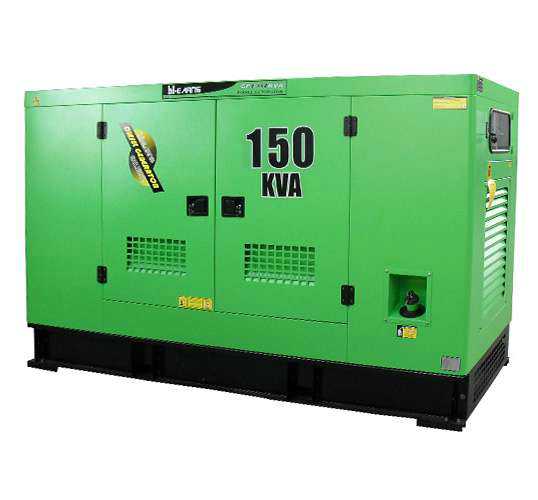
Continuous duty changes the rules. A water cooled diesel generator is engineered to run for long hours, sometimes around the clock, and its cooling loop holds the engine at a steady operating temperature the whole time. That balance keeps the engine at a consistent temperature, which supports consistent power output, better fuel economy, and far less thermal stress on pistons, cylinder heads, and bearings. Efficient cooling also stabilizes combustion temperatures, which supports cleaner burning and helps the engine meet emissions targets.
ISO 8528 defines prime power as the maximum output a generator delivers under variable loads for unlimited hours each year, with a 12-hour limit at 10% overload. Water-cooled sets fit that definition comfortably. They sustain high loads for long stretches without overheating, and they recover fast when demand spikes. You see the payoff in steadier voltage, fewer thermal shutdowns, and longer gaps between service checks.
Heat is not the only thing a coolant jacket manages. The layer of coolant around the combustion chambers acts as a dense sound insulator. It dampens piston slap and mechanical noise, and it lets designers place the radiator fan where its sound is easier to control. That is why almost every silent diesel generator on the market is water-cooled. Typical water-cooled sets measure 62–68 dBA at 7 meters. Air-cooled units often land at 72–78 dBA, with a higher-pitched whine that is harder to mask. Water-cooled engines usually turn at lower RPM, while air-cooled units often spin faster, and the slower speed produces a low-frequency hum instead of a sharp whine. Add a silent-type enclosure and the gap widens further. Residential neighbors notice the difference at night, and hospital staff notice it in patient wards.
Lifespan tells the same story. Water-cooled units commonly reach 8,000–12,000 hours, while comparably sized air-cooled models often last 4,000–6,000 hours. Lower vibration helps too. Bearings, mounts, and couplings wear more slowly when the block runs cool and steady. That gap compounds over years of daily service, and it shows up in your maintenance budget. Plan coolant and radiator service on a fixed schedule.
Keep the comparison fair. Air-cooled units remain a good fit for intermittent use, short runtimes, and light loads. They cost less and ask for less upkeep. For a hospital, school, supermarket, or urban site that needs power every day, though, a water cooled diesel generator gives you the quieter, longer-lasting option. Match the set to your real load profile before you buy.
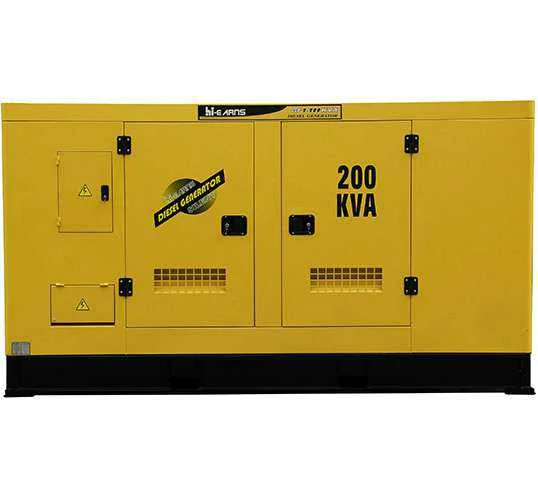
Hiearns builds its water cooled diesel generator line from 10KVA to 300KW. You can choose an open frame or a silent configuration, and every unit uses a brushless alternator. Engine options include Quanchai and Cummins, so you can match the power plant to your duty cycle. Each set carries ISO9001-2015 QMS certification and CE approval for the European Union. A full bottom fuel tank keeps fuel consumption low and extends runtime, and the digital control panel makes monitoring simple.
These generators serve hospitals, data centers, mines, construction sites, base stations, military installations, remote infrastructure, and rental fleets. The table below shows how three common settings use them.
Setting | Typical Applications and Configurations |
|---|---|
Hospitals and Healthcare Facilities | Standby sets with automatic transfer, three-phase output, and emergency distribution panels. Critical loads include operating rooms, intensive care equipment, medical gases, elevators, fire systems, and refrigeration. |
Data Centers | Standby systems with automatic transfer, remote monitoring, low transient voltage deviation, and parallel operation. The generator must support cooling equipment, pumps, IT loads, security systems, and battery or UPS infrastructure. |
Construction Sites | Prime-rated, open-frame or trailer-mounted sets. Equipment includes cranes, welders, compressors, pumps, lighting towers, and temporary offices, which create changing loads and high motor starting currents. |
Match generator size to your load profile first. Add up your running loads and your motor starting currents, then leave headroom for simultaneous starts. Choose a silent enclosure for noise-sensitive sites such as hospitals, schools, and urban buildings. Plan coolant and radiator service on a fixed schedule.
Follow these maintenance practices to protect the cooling system:
Check the coolant level when the engine is cool, and never open a pressurized system while hot.
Remove air from the cooling system after coolant replacement by idling the engine and topping up as the level drops.
Inspect radiator connections, hose joints, and drain plugs for leaks with the engine running and after shutdown.
Watch the temperature gauge during operation. A sudden rise may signal trapped air or a circulation problem.
Change coolant every 1000 to 2000 operating hours, depending on the engine and environment, and keep records of replacements and run hours.
Continuous power leaves no room for weak heat management. Water cooling delivers it, and that single fact drives every benefit you have seen here. A water cooled diesel generator runs more efficiently, operates more quietly, and holds up far longer under sustained load. Reliability and durability follow naturally.
Air-cooled units still earn their place in lighter, intermittent duty. For sustained commercial and industrial operation, though, water cooling is the stronger choice. Assess your real load profile now, then talk to a specialist about the right configuration for your site.
It can run for days. The cooling loop holds the engine at a steady temperature, so sustained load does not build up heat stress. Water-cooled sets commonly reach 8,000–12,000 hours of service life. Plan coolant and radiator service on a fixed schedule to protect that life.
Yes. The coolant jacket around the combustion chambers insulates sound, and the radiator fan is easier to control. Typical water-cooled sets measure 62–68 dBA at 7 meters. Air-cooled units often land at 72–78 dBA with a sharper whine. A silent-type enclosure widens the gap further, which matters for hospitals, schools, and urban sites.
Change coolant every 1000 to 2000 operating hours, depending on the engine and environment. Check the coolant level when the engine is cool. Inspect radiator connections, hose joints, and drain plugs for leaks. Watch the temperature gauge during operation. A sudden rise may signal trapped air or a circulation problem.
Add up your running loads and your motor starting currents first. Then leave headroom for simultaneous starts. Hiearns covers 10KVA to 300KW in open frame and silent configurations, with brushless alternators and Quanchai or Cummins engines. Match the set to your real load profile before you buy.
It fits intermittent use, short runtimes, and light loads. Continuous duty is a different job. Air-cooled output depends on ambient temperature and airflow, so a hot day trims the cooling margin. For daily commercial or industrial operation, choose water cooling instead.